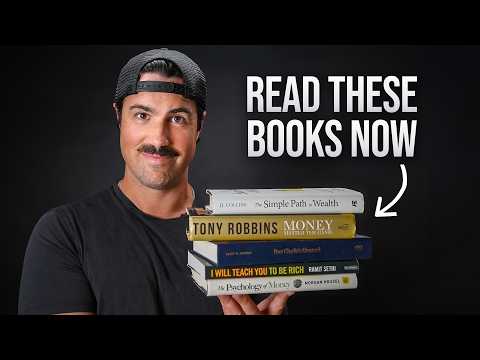
10 Life-changing Lessons from Rich Dad Poor Dad by Robert Kiyosaki | Book Summary
About this video
Kegley summarises what he presents as the 10 best ideas from Robert Kiyosaki’s Rich Dad Poor Dad, stressing he is not a financial expert, is not giving financial advice, and values the book mainly for mindset rather than as a get-rich-quick scheme. He recounts Kiyosaki’s two father figures — a poor biological father and a rich mentor — to argue that beliefs about money are learned from models around us, and that being broke is temporary while being poor is a state of mind that asks ‘how can I afford it?’ instead of assuming it is impossible. Core ideas include: the poor and middle class work for money while the rich have money work for them; wealth is how long you could survive if you stopped working today; and financial IQ — which schools, he says, do not teach — comprises accounting, investing, understanding markets, and law. He covers the EBSI quadrant (employee, self-employed, business owner, investor), favouring business owner and investor; assets that put money in your pocket versus liabilities that take it out; compounding; and paying yourself first. He closes with his own getting-started actions, such as living on 75% of his pay.
Key takeaways
- Examine your models for wealth: Kegley, summarising Kiyosaki, says financial beliefs are learned from parents and those around you, and financial IQ must be deliberately acquired.
- Reframe poor as broke: broke is a temporary lack of money that prompts creativity about how to afford something, whereas a poor mindset assumes you never could.
- Build financial IQ across four areas Kiyosaki names — accounting, investing, understanding markets (supply and demand), and law (taxes and lawsuits) — before expecting money alone to fix finances.
- Accumulate assets and minimise liabilities: assets such as stocks, bonds, mutual funds, income-producing real estate and royalties generate money over time, while liabilities drain it; Kegley adds the advice to grow income, not lifestyle.
- Pay yourself first and use compounding: set aside a portion of each paycheck for assets before bills and other spending — Kegley says he aims to live on 75% and invest the rest — and start early so compounding has time to work.
Episode details: published August 1, 2016 · 23:35 long. Summary written by Self Growth Videos from the episode itself. Business results and any income figures mentioned are Clark Kegley’s own claims, shared for education — they are not typical or guaranteed.
← Previous: 10 Best Ideas | How to Win Friends and Influence People | Dale Carnegie | Book Summary · Next: 10 Best Ideas | STEAL LIKE AN ARTIST | Austin Kleon | Book Summary →
All Clark Kegley videos · Clark Kegley profile · Clark Kegley on YouTube
You Might Also Enjoy

It took me 35 years to realize what I’ll tell you in 13 minutes...
Explore →
Dumb People Are WINNING While You’re STUCK Overthinking
Explore →
How to Get Your Brain Addicted to Hard Things, Not Cheap Dopamine
Explore →
This is Boring, But It’ll Make You Dangerously Confident
Explore →
Give me 17 minutes and I'll ELIMINATE your self-sabotage forever
Explore →