Adam Grant: Open a Writing Feedback Session with a Self-Review
State the draft's purpose, name one strength and one uncertainty, then use a reviewer's specific observations to choose a revision.
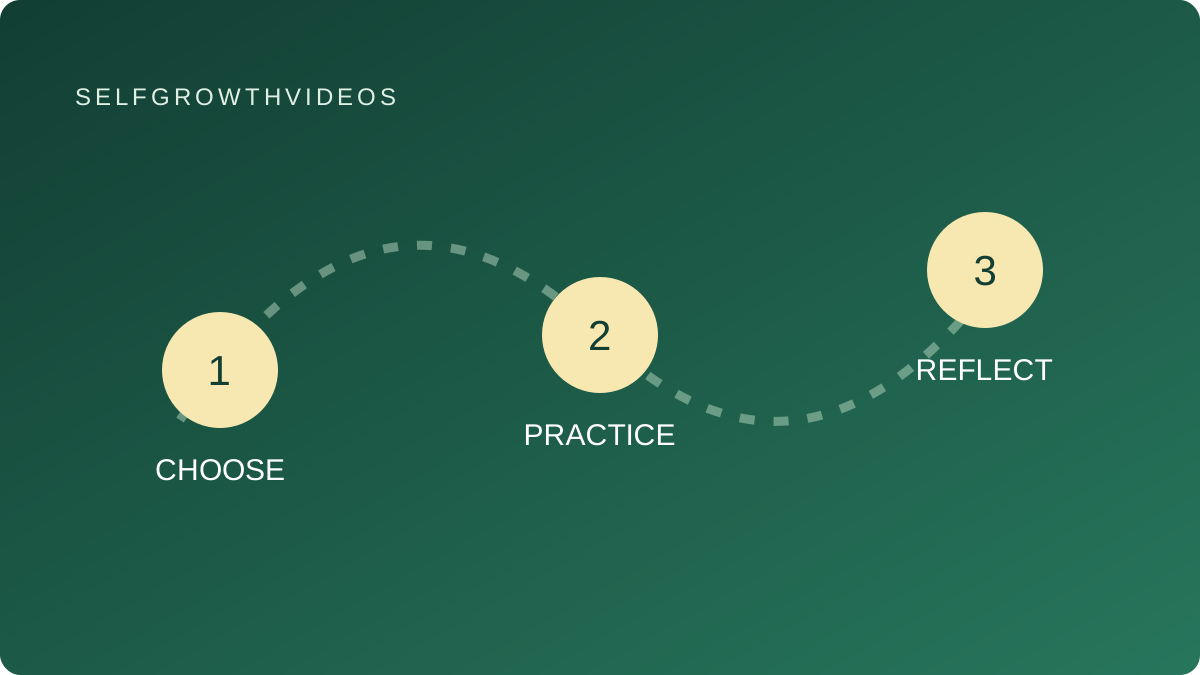 Choose, practice, reflect
A practical lesson
The Lesson
You share a draft and hear, “Looks fine.” That response may be sincere, but it gives you little to revise. Before asking for more comments, make the purpose of the draft and the uncertainty you are working on easier for a reviewer to see.
In the January 2018 answer to Question 1 in his official Wondering archive, Adam Grant describes a group feedback exercise in which a person first evaluates their own strengths and development areas, before peers comment. His official biography identifies him as an organizational psychologist and author. We can use that described sequence as a starting point for a small writing review.
A self-review is not a demand to criticize yourself or list personal failings. Focus on the artifact. Name what the text is meant to help a reader do, something it currently does and a part you are unsure about. The reviewer then has a concrete starting point while remaining free to notice something you missed.
For example, a workshop notice should help a participant identify where to go and what to bring. A writer might say: “The notice is short, but I am unsure whether the materials instruction is clear.” That opens a question about wording. It does not require the reviewer to agree with the writer’s assessment or predict how every participant will respond.
Keep the writer’s decision visible after the conversation. A comment is information to consider, not an automatic instruction to rewrite everything. Ask which part of the text supports the comment and compare a proposed change with the draft’s purpose and supplied facts.
Reflection
- What should the reader know or do after reading this draft?
- What is one feature of the text that already serves that purpose?
- Which uncertainty can I describe without judging my ability as a person?
- How will I decide whether a suggested revision fits the brief?
Practice
Original SelfGrowthVideos exercise: This writing-feedback rehearsal is our application of the self-review sequence. It is not Grant’s worksheet, an endorsed tutoring method or a guarantee that someone will offer candid feedback. Use the fictional notice below; no personal writing or customer information is needed.
The supplied facts are simple: a fictional session starts at 10:00 in the Blue Room. Participants bring a notebook, and the organizer supplies pencils. The sample draft says: “Bring what you need and meet us there at ten. We’ll provide some supplies.”
- State the reader task. Write: “A participant should be able to identify the room, the start time and what to bring.” Use this as the purpose of the review, rather than asking whether the draft is generally good.
- Make a brief self-review. Name a strength and an uncertainty. You might note that the draft is short, then identify “what you need” as wording that may be too vague. Describe the text rather than your intelligence or confidence.
- Ask one bounded question. Invite a willing reviewer to point to wording that leaves a participant guessing. Also ask whether they notice a different issue from the one you named. If working alone, write the questions and make your own observations without presenting them as another person’s response.
- Record the observation. Keep a comment tied to the text: which phrase was unclear, and what information did the reviewer need? Separate that observation from a proposed replacement. “There does not name a room” and “add the room name” have different jobs.
- Choose a revision. Compare the suggestion with the supplied facts. A possible revision is: “Meet in the Blue Room at 10:00. Bring a notebook; pencils are provided.” Record why you accepted that change. Do not add a price, access arrangement or other detail that was not supplied.
- Check the reader task again. Can the revised notice answer the room, time and materials questions? Keep one remaining uncertainty if there is one. Save the original, the comment and the revision so you can explain the decision.
A reviewer may suggest adding more background or a warmer introduction. You can consider that idea while keeping this trial focused on basic arrival information. A useful review can end with a reason to defer a suggestion, as well as a reason to accept one.
Review
Did the conversation produce an observation you could locate in the draft? Did your opening self-review help define the question, or accidentally make it seem that only one answer was welcome? Revise the request if it left no room for the reviewer to disagree.
The sample demonstrates a feedback process on one small text. It does not establish a tutoring qualification, market demand or a universal way to handle criticism. Carry one clearer question into the next review and keep responsibility for the writing decision with the writer.
Go Deeper
Visit Adam Grant’s profile and the separate lesson on testing a working assumption. Compare writing a product description someone can use to decide for a different, fact-focused editing task. Explore Tutoring & Learning Support and Writing, Editing & Translation for related practice topics.