Admiral McRaven: Check Readiness for a Demanding Day
How do I check that I am ready for a demanding day?
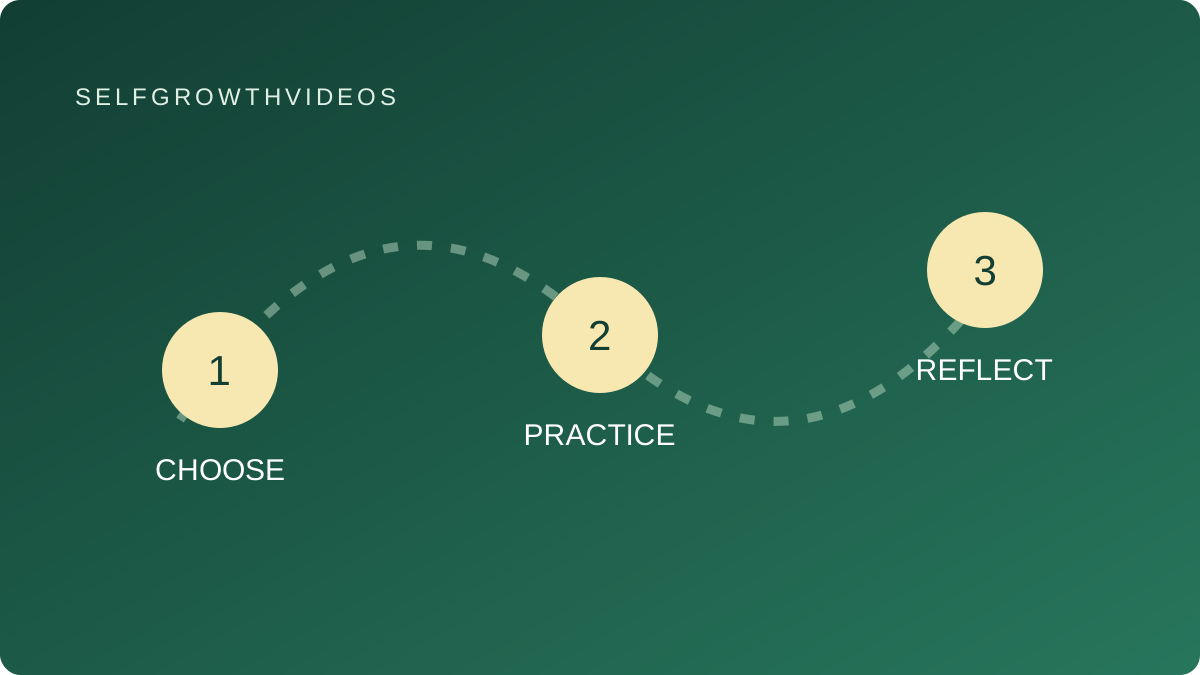 Choose, practice, reflect
A practical readiness exercise
The Lesson
You have a demanding day ahead. You know the appointment time and have thought about the work, but you have not checked the document, address, or materials the day depends on. A small readiness check can give you a concrete answer to a useful question: what is ready, and what still needs attention?
In a University of Texas Athletics interview, William H. McRaven explains the bed-making example from his military training as a lesson in discipline and attention to detail. The ordinary task matters in his account because it gives people something specific to complete and inspect. His publisher identifies Make Your Bed as the book developed from his 2014 University of Texas at Austin commencement address.
Bring that attention to a civilian task that serves your circumstances. Making a bed can be a personal preference; it is not a requirement for a worthwhile day. Your useful check might be confirming that the file you need actually opens, or that an appointment’s location matches the address you planned to use.
The important distinction is between remembering an intention and examining its result. “I downloaded the form” describes an action. “The correct form opens, and I know which parts I need to complete” describes a state you can check. A routine deserves its place because it serves something you need to do.
Choose the task before you are rushed. Ask what the upcoming activity depends on and which ordinary preparation is within your control. Keep the check small enough to finish without displacing sleep, essential care, or another fixed responsibility. Preparation can happen the evening before, during a break, or at another suitable time.
Imagine a student attending a practical workshop. Packing a notebook is useful, but the workshop also requires an example file. A readiness check could be opening that file on the device the student will use. Discovering a problem then leaves a clear next question for the organizer. A tidy bag alone would not reveal it.
Reflection
- What specific activity will make the day demanding?
- Which ordinary detail could prevent me from participating as planned?
- What can I inspect rather than assume is ready?
- What would count as complete, and what needs someone else’s answer?
Keep a distinction between your preparations and circumstances you cannot control. This check is for useful information, not a promise that the day will go smoothly.
Practice
This is an original SelfGrowthVideos exercise, not McRaven’s prescribed checklist or an endorsed program.
- Name the demand. Write the activity, its time, and one thing you must be able to do when it begins.
- Choose one dependency. Identify a document, material, instruction, or arrangement that activity needs. Pick something appropriate for you to check.
- Define the evidence. Describe the observable result: the correct file opens, the material is present, or the location is confirmed by the organizer’s information.
- Do the check. Record what you actually found. If it is incomplete, name the missing item or question and the next sensible response.
- Stop at the agreed scope. Avoid expanding one useful preparation into a complete overhaul of your life before tomorrow.
A simple note might read: “The workshop begins at ten. I need to show my example. I opened the correct file on my laptop and checked that the images are included. The joining instructions are saved beside it.”
If an essential dependency remains unresolved, say so plainly. “Waiting for the organizer to confirm the room” is more informative than marking the whole day ready. Where possible, consider a practical alternative without assuming that another person has agreed to it.
Review
After the activity, compare the check with what the day actually required. Did the checked detail matter? Did a different missing detail cause trouble? Was the effort reasonable for its usefulness?
Keep, change, or retire the check on that evidence. You are building an appropriate preparation routine, not collecting rituals to prove your discipline. A completed small task is enough to inspect; it does not need to stand for your character.
Go Deeper
Explore Admiral McRaven’s teacher profile and the Habits learning hub. For a different task, James Clear: Make the First Step Easier examines obstacles to beginning a practice. Jocko Willink: Debrief a Project Handoff helps a group learn from what happened afterward.