Alex Hormozi: Separate a Service Promise From Delivery
What must happen behind the scenes for this service to deliver what it promises?
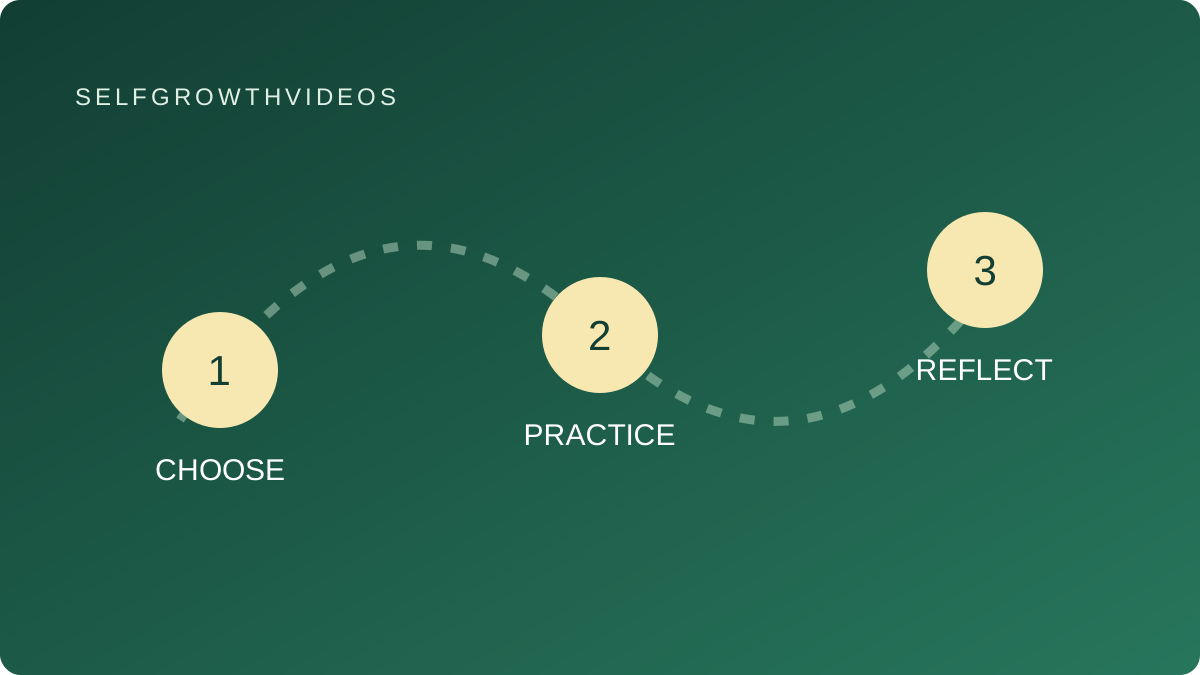 Choose, practice, reflect
A practical learning exercise
The Lesson
You offer to help a neighborhood group organize its event photos. The promise sounds simple: a labeled folder of selected photos by Friday. But the work depends on getting the files, knowing which images may be shared, choosing a naming system, and leaving time for someone to review the result. A clear promise needs a workable path behind it.
In his bylined article What Business Are You REALLY In, Alex Hormozi describes discovering that selling software did not solve his product’s delivery problem. He also argues that a business’s central challenge may differ from the work its owner already knows how to do. His official biography identifies him as an entrepreneur and the founder of Acquisition.com.
For this lesson, use that distinction to examine one modest service. Making an attractive promise, finding an interested person, and fulfilling the promise are separate parts of the work. An improvement to one part does not automatically repair another.
Start with a result the recipient can recognize. “I’ll improve your photos” leaves much undecided. “I’ll place the selected event photos in labeled folders and send a review link” gives you something concrete to discuss. It still needs agreement about selection, access, and what the recipient expects.
Then trace the delivery conditions. What must you receive? What work must you perform? What must someone else decide? Where could the process stop? Include dependencies that seem ordinary. Waiting for the right files is part of delivery even when editing is your strongest skill.
A constraint is a place where the planned work cannot proceed as promised. It is not necessarily a character flaw or a reason to work longer. If no one can approve the selected photos before Friday, a better editing tool may leave the same obstacle in place. You may need a different review date or a narrower promise.
Keep observations separate from guesses. “We have not received the original files” is an observation. “The organizer probably does not care” assigns an intention you have not established. A factual delivery map gives you a more useful conversation.
You may discover that the promise itself needs to change. Reducing the scope or declining work you cannot responsibly deliver can be a considered decision. This exercise helps make the work visible; it does not establish market demand or predict business results.
Reflection
- What result does the recipient think I am offering?
- Which conditions must be in place before I can deliver it?
- Which step depends on someone else’s decision or contribution?
- Am I polishing the sales description while leaving a delivery obstacle unresolved?
Practice
This is an original SelfGrowthVideos exercise. It is not Hormozi’s prescribed process and does not imply his endorsement.
Choose a small service you already understand. Use a practice scenario if there is no current project. Make a four-column note:
- Promise: Describe one bounded result, including what is outside the scope.
- Delivery conditions: List the inputs, work, permissions, and review needed.
- Evidence: Mark each condition as confirmed, missing, or still unknown.
- Next clarification: Write the specific question or scope change that would address the first unresolved condition.
For the photo project, a row might read: “Labeled photo folders / original files from organizer / not received / ask which files are ready and agree when they will arrive.” Another could identify who approves the selection.
If this is actual shared work, discuss the unresolved condition with the appropriate person before making a new commitment. Keep the note about the process, without adding private customer information.
Review
At the next project check-in, compare your map with what happened. Did the named condition actually hold up delivery? Did you miss a dependency? Did the recipient understand the same result you intended?
Revise the promise or delivery plan using what you learned. Record the agreed change so both sides can refer to it. A clearer process is a useful outcome even if you decide the service should remain smaller.
Go Deeper
Explore Alex Hormozi’s teacher profile and the Entrepreneurship learning hub. For writing usable instructions once a recurring task is understood, try Dan Martell: Document One Recurring Task. For examining a belief before treating it as fact, see Adam Grant: Test a Working Assumption.