Allyson Felix: Adapt Your Practice When Your Responsibilities Change
How do I adapt a practice schedule when my responsibilities change?
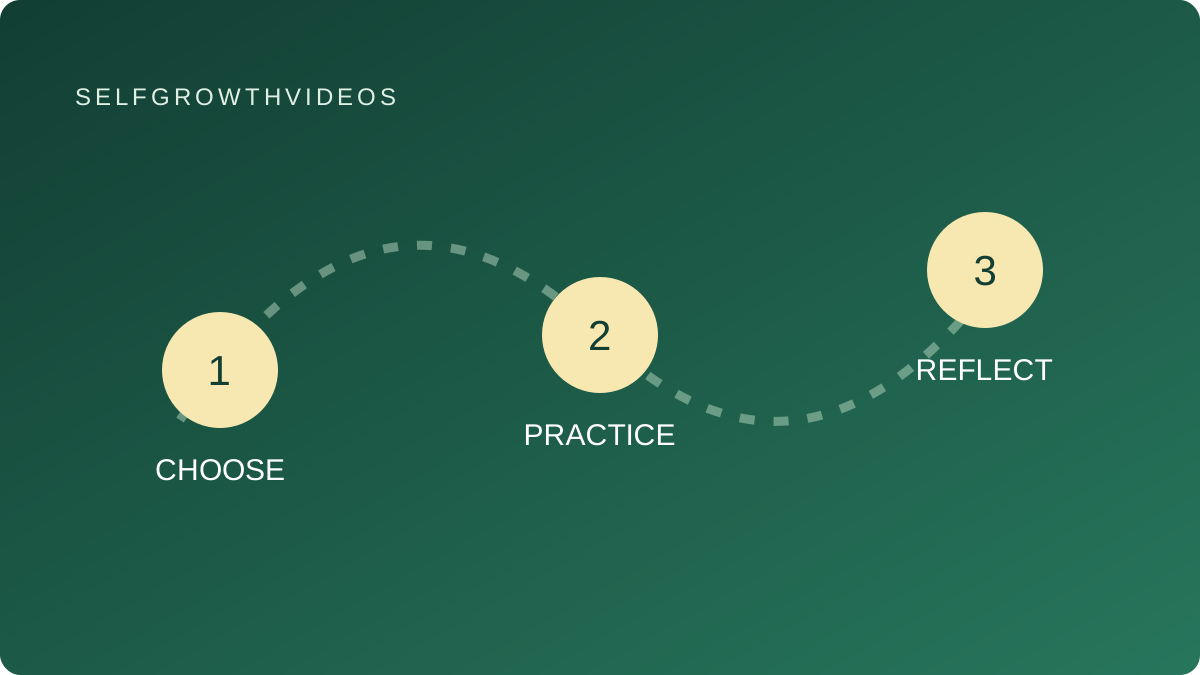 Choose, practice, reflect
A practical scheduling lesson
The Lesson
You planned to study a language for half an hour after work. Then your work hours changed, or someone in your household needed more help. The calendar still shows the old study time, but the time is no longer yours to use.
A missed session can reveal a problem with the plan. Before deciding that you lack discipline, ask what changed and which part of your practice still matters. You may need a different time, a smaller task, shared support or a deliberate pause.
What Allyson Felix’s experience offers
In a March 2020 World Athletics interview, Allyson Felix described how becoming a mother changed life alongside training. She spoke about patience, adapting her training and prioritizing a full set of responsibilities. Her account illustrates that a serious commitment can require a revised approach when circumstances change.
Use that idea as a starting point for an ordinary learning plan. You do not need to copy an elite athlete’s workload. The exercise below is original SelfGrowthVideos material, not Allyson Felix’s worksheet or a schedule she prescribes. Her inclusion does not imply endorsement of this site.
Rebuild from the week you actually have
Write down what now takes time: your changed shift, a class, travel, a household responsibility or an appointment. Include the preparation and travel that make a commitment possible. A twenty-minute appointment may use more than twenty minutes of your day.
Then distinguish fixed commitments from flexible ones. You may be able to move a practice session; you may not be able to move a work shift. If your plan assumes that someone else will cover a responsibility, discuss it with them before counting that time as available.
Keep personal details private if you share your schedule. Another person can help with timing without needing the full story behind every commitment.
Keep a useful task inside the smaller session
“Study for less time” is incomplete. Name something you can actually practice in the time available. For language learning, that might mean saying three sentences aloud and checking one unfamiliar word. For a software skill, it might mean writing and running one small example.
Choose the task for its connection to your learning goal. Sorting bookmarks or choosing a new notebook may be preparation, but those actions do not necessarily practice the skill you intended to learn.
Set a stopping point, too. “Write three sentences” tells you what to finish. “Catch up on everything I missed” leaves the session open-ended and may not fit your new week.
Make room for another decision
A fallback is an option you have chosen in advance, not an obligation to work through every interruption. If your planned session becomes unavailable, you might use another genuinely open slot, complete a smaller task or pause until your next review.
You can also reconsider the goal itself. A plan that repeatedly conflicts with essential responsibilities may need support or a different season of your life. You are allowed to change its pace, put it on hold or choose something else.
Reflection
- What changed since I made the original schedule?
- Which commitments are fixed, and which can I move or discuss?
- What part of the learning goal still matters to me now?
- What would make this week workable without depending on unconfirmed help?
Practice
This is an original SelfGrowthVideos exercise. Make one revised practice plan for the coming week.
- Name the change. Write one factual sentence about the new constraint, without turning it into a judgment about yourself.
- Choose the task. Identify one small piece of the skill you want to practice and its stopping point.
- Find a real opening. Select a time that fits your current commitments. Include setup time. Confirm any shared responsibility before relying on it.
- Choose a fallback. Decide whether an interruption means another available slot, a smaller task or a pause. You do not have to fill every gap in the calendar.
- Set a review. Pick a time to look at whether the plan fitted your week. Treat this as a check on the plan, not a promise that the goal will be achieved by then.
For example: “My evening shift now overlaps the old study time. On my next day off, after breakfast, I will spend ten minutes writing three sentences about my day and check one word. If that time becomes unavailable, I will review the plan on Sunday rather than trying to make up every missed minute.”
The ten minutes are a planning choice for this example, not a universal minimum or a guaranteed way to form a habit.
Review
At your chosen check-in, record what happened. Was the opening real? Did the task fit? What preparation or support did you overlook?
Choose one adjustment: keep the plan, move the time, change the task, ask for agreed support or pause. If the schedule worked, consider whether the practice addressed the skill you wanted to learn. If it did not work, use that information to revise the next attempt.
Go Deeper
- Visit the Allyson Felix teacher profile for the existing learning collection.
- Explore a different practice method with Angela Duckworth: Keep the Goal, Reconsider the Strategy.
- Prepare the starting step with James Clear: Make the First Step Easier.
- Browse the Discipline learning topic for related ideas.
Books on this topic
Books from this library that go deeper on the ideas in this page.


Some links on this page are affiliate links. As an Amazon Associate I earn from qualifying purchases. How affiliate links work here