Ask for Useful Feedback on a Project You Care About
How do I ask for feedback on unfinished work and choose one useful revision?
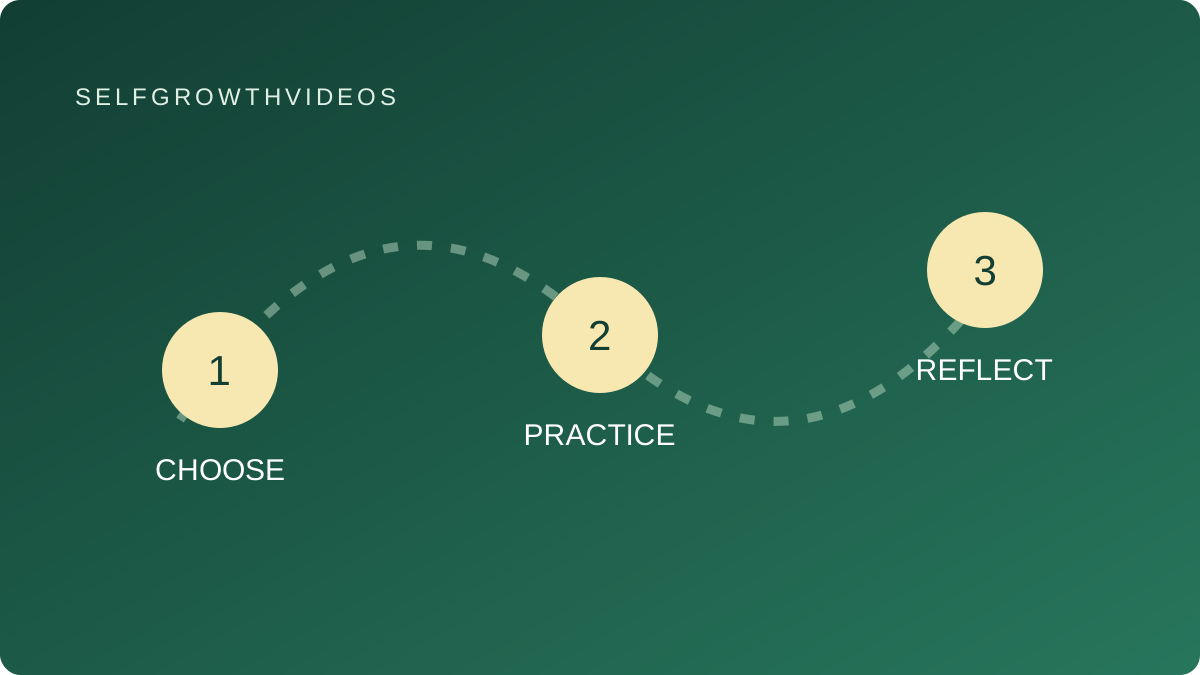 Ask, listen, revise
Feedback practice
The Lesson
You have made something you care about: a workshop outline, a piece of writing, a small business idea, or your first attempt at a new skill. You want another person’s perspective, but showing the work means letting someone see where it is unfinished.
Start by deciding what you want to learn. A question about one part of the project gives the other person a useful place to begin. It also gives you something concrete to work with afterward.
In her article about clarity and kindness, Brené Brown explains why avoiding honest feedback and leaving expectations vague can undermine working relationships. Her approach calls for direct conversation with curiosity and a willingness to listen. Read Brown’s article on clarity.
Brown and Barrett Guillen also discuss preparing to give feedback in their Dare to Lead conversation. They emphasize engaging with the problem together and remaining open to the other person’s perspective. Read the official episode transcript.
The exercise below is an original SelfGrowthVideos practice for someone seeking feedback. It applies those ideas to a small project; it is not Brown’s Engaged Feedback Checklist and does not imply her endorsement of this site.
Reflection
Before asking anyone to look at your work, write a few answers:
- What is this project supposed to help someone do or understand?
- Which part am I uncertain about?
- Do I want encouragement, help with a decision, or a close review of the work?
- Who has a relevant perspective and treats unfinished work with respect?
You can ask for encouragement when that is what you need. You can also ask for a focused review. Being clear about the request helps the person understand the role you are inviting them to play.
Practice
Pick one piece and one question
Choose something small enough to review in a short conversation: the first page of a guide, three slides, a sketch, or a brief description of an idea. Decide which question would help you move forward.
For example, you are planning a beginner workshop on growing herbs in a small space. You have written an introduction and a list of materials. Before developing the entire workshop, you want to know whether a beginner can tell what to bring and what they will learn.
Your question could be: “After reading this page, which materials would you bring, and what do you expect to be able to do by the end?”
That answer gives you information about the page. You do not need the reviewer to decide whether the whole project will succeed.
Make the invitation clear
Try a request like this, adapting it to your own voice:
“I’m making a short workshop for people who haven’t grown herbs before. Would you have ten minutes this week to read the introduction? I’d like to know whether the materials and learning goal are clear. It’s fine if you don’t have time.”
Wait for their agreement before sending more work or assuming they will meet a deadline. If they decline, choose another person or another time. A clear invitation includes room for an honest answer.
Listen for details you can use
Let the person explain their response. If a comment is broad, ask for a concrete example: “Which sentence gave you that impression?” or “What information were you looking for there?”
Write down what they observed before explaining what you intended. You might learn that your intended meaning never made it onto the page. You might also find that the reviewer was imagining a different audience from the one you had in mind.
You can disagree, ask a follow-up question, or take time to think. If the conversation becomes personal or disrespectful, end it and seek another perspective. Useful feedback does not require accepting every comment or continuing every conversation.
Choose one revision
Afterward, record three things:
What I heard: a specific observation about the work.
What I will try: one change that serves the project’s purpose.
What I will check: how I will tell whether the change made the work clearer or more useful.
For the herb workshop, you might separate essential materials from optional ones, then ask a new reader to explain the list in their own words. Keep the earlier version so you can compare the two.
Review and Check In
At your next weekly check-in, review what happened. Did you make the request? Did the conversation help you understand the work differently? What did you revise, and what still needs a decision?
If you have not asked yet, identify the part you got stuck on: selecting a person, choosing a question, or sending the invitation. Make that your next action. You can keep the work private while you develop it and decide later whether you want to share the finished project publicly.
Go Deeper
Explore Brené Brown’s teacher profile for her books and official podcast links. Browse the Self Growth Lessons library for further practice in listening and communication.
For this week, choose one piece of work and one question. Give yourself a chance to learn from a conversation before making the next version.