Courtney Dauwalter: Turn a Project Obstacle Into a Specific Request for Support
How do I describe an obstacle and the support I need?
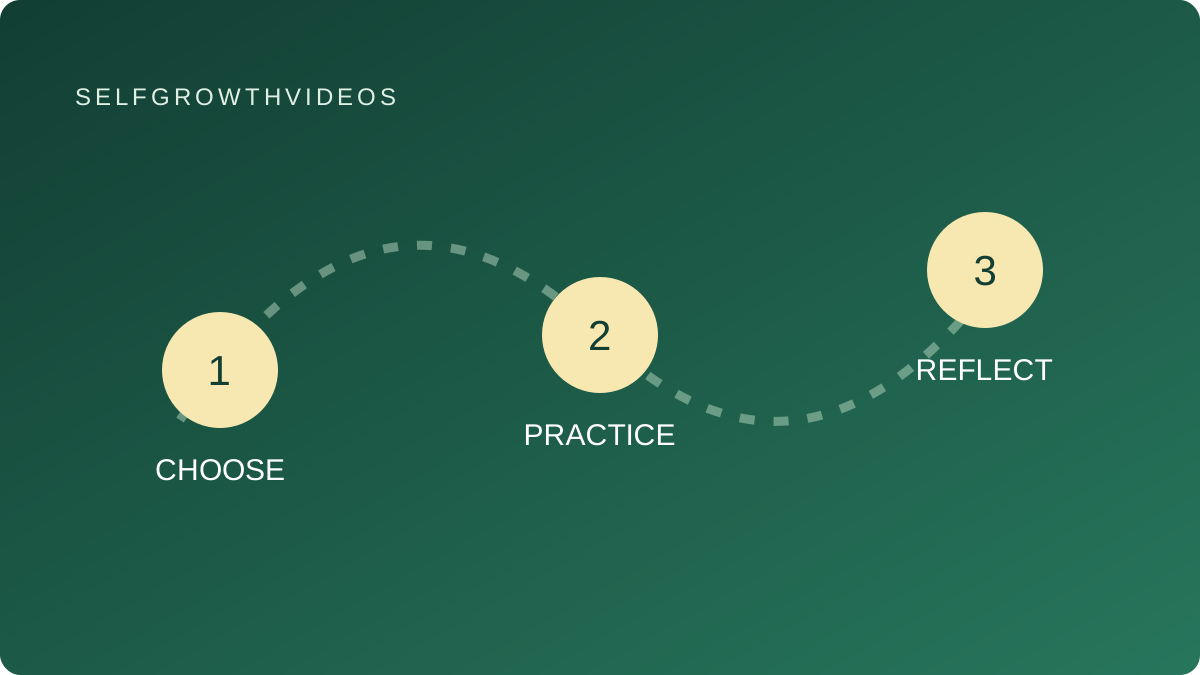 Choose, practice, reflect
A practical support request
The Lesson
Your project has stopped moving. You have rewritten the introduction twice, opened several tutorials, and told a friend that the whole thing is a mess. They offer encouragement, but the same unfinished section is waiting when you sit down again. What kind of support would help with this particular obstacle?
In the published transcript of her 2024 Hardrock interview with iRunFar, Courtney Dauwalter describes her crew providing practical assistance and calm encouragement during a difficult race. Her official website identifies her as an ultrarunner based in Leadville, Colorado. The interview illustrates that even an individual performance can involve other people’s contributions.
The application here is to an ordinary project: identify the support that fits the obstacle. It is our interpretation, not a project-management system taught by Dauwalter. Her account of an elite race is also not a guide to managing physical symptoms or deciding when to continue an athletic effort.
Start by locating the obstruction. “I am bad at presentations” makes the whole task and your identity the problem. “I cannot tell whether slide three explains the process” identifies something another person could help examine. You may still feel discouraged, but you now have a place to direct the request.
Different obstacles call for different help. You might need an explanation, access to a missing resource, a decision from someone responsible, feedback on a draft, or a person who will listen while you describe the problem. Encouragement can matter, but it cannot supply a password, choose a project requirement, or tell you which instruction is unclear.
Make the request small enough to understand. Include what you have tried, the piece you want help with, and the time or effort you are asking for. A clear request gives the other person room to agree, decline, or suggest a more suitable kind of support.
Receiving help leaves you with work to do. You may need to prepare the file, clarify a question, compare suggestions, or act on a decision. The aim is a useful contribution to the task, with each person’s role understood.
Reflection
- Where exactly does the work stop?
- What have I already tried, and what happened?
- Do I need information, feedback, a resource, a decision, or encouragement?
- Who has the relevant knowledge or responsibility, and what can I reasonably ask?
Pick a modest project obstacle that can be discussed without sharing private information.
Practice
This is an original SelfGrowthVideos exercise inspired by the role of support in the interview.
Write a four-part request:
The task: What are you trying to do?
The sticking point: Which concrete part is unresolved?
The help: What contribution are you asking for?
The scope: How much time or attention does it require, and when would it be useful?
For example: “I am preparing a short presentation about our volunteer signup process. I revised slide three, but I cannot tell whether a new volunteer would understand the first step. Could you read that slide and tell me what you would do next? Five minutes before Thursday would help; if you are unavailable, I can ask someone else.”
Read the message from the recipient’s position. Can they find the relevant slide? Do they know what kind of response you want? Have you asked rather than assumed they will do the work?
Send the request in an appropriate channel, then identify what you can do while waiting. If the answer is no, thank them and consider another person, a smaller request, or an available resource. If the obstacle requires an authorized decision, bring it to the person responsible instead of collecting guesses.
Review
When the response arrives, record what it clarified and what remains unresolved. Did you ask for the right kind of help? Did the person understand the request? Name your next action and acknowledge their contribution.
If no response arrives, choose a reasonable follow-up point or another route. A clearer request can improve the conversation, but it does not guarantee availability or solve the whole project.
Go Deeper
Visit the Courtney Dauwalter teacher profile. Use Brené Brown’s project feedback lesson when you need a focused review, or Ryan Holiday’s setback lesson to choose an available next response.
Books on this topic
Books from this library that go deeper on the ideas in this page.


Some links on this page are affiliate links. As an Amazon Associate I earn from qualifying purchases. How affiliate links work here