Dan Martell: Document One Recurring Task
Which recurring task needs instructions that someone else can actually use?
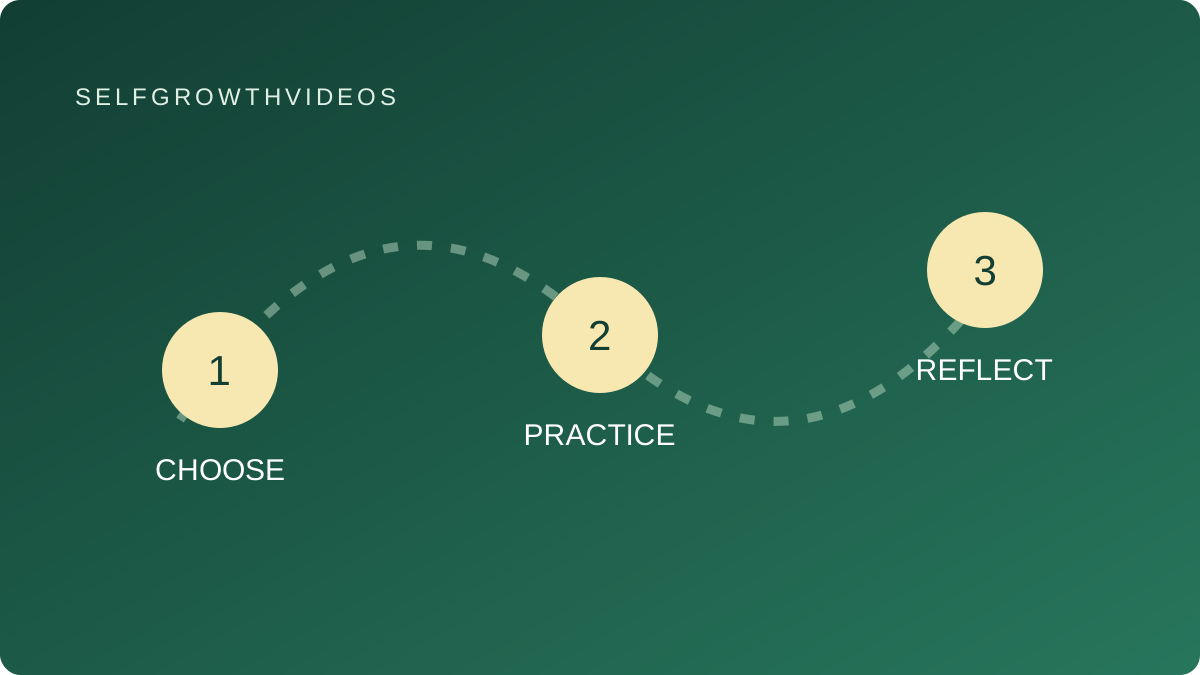 Choose, practice, reflect
A task-documentation exercise
The Lesson
A group prepares the same weekly meeting, but each new helper has to ask how it works. The problem may be a small decision that experienced people carry in their heads: which template to use, where approved information lives, or when to ask someone a question. Document one recurring task before attempting to document everything.
In his bylined article The Way Richard Branson Manufactures Time, Dan Martell explains playbooks as collections of procedures, reference documents, and templates. He also discusses keeping procedures in use and involving the people doing the work in creating them. His publisher identifies him as the author of Buy Back Your Time.
You can explore that documentation idea in a workplace, study group, or volunteer team. The aim here is a usable instruction for one ordinary task. You do not need to hire someone, purchase software, or build a business to try it.
Select a task with a clear beginning and a visible result. “Help with the group” is too broad. “Prepare the agenda draft from submitted items” is a task you can describe. Look for work that recurs and repeatedly generates the same clarification questions.
Notice the decisions as well as the actions. “Open the template” leaves a newcomer wondering which template is current. “Add the items” may leave them guessing whether every suggestion is approved. Instructions should identify the information and permission needed to make the next step reasonable.
Describe the ordinary path, then the point where a person should stop and ask. A procedure cannot anticipate every circumstance. If two sources disagree or a required detail is missing, the useful instruction may be to consult a named role rather than improvise an answer.
The person using the instructions can help improve them. A question from a newcomer may reveal something you omitted because it feels obvious to you. Keep that question connected to the relevant step and revise the document after checking the answer.
Reflection
- Which task produces the same questions each time?
- What do experienced people know that the current instructions leave out?
- Where does the task require a decision or approval?
- Who uses the instructions, and who can confirm that they are accurate?
Choose a task you understand and are authorized to document. Start with an ordinary, low-stakes process whose owner can review your description.
Practice
This is an original SelfGrowthVideos exercise. It is not a Martell course worksheet or a method he endorses.
Observe yourself completing the selected task. Write a short instruction with these parts:
- Start: What event or request begins the task?
- Inputs: Which current information, template, and access are required?
- Steps: What actions and decisions lead to the result?
- Finish: What observable result means this task is complete?
- Questions: When should the user ask for help, and which role should they ask?
For an agenda draft, an instruction might identify the shared template, the agreed cutoff for submitted items, and the place to save the draft. It should also say who approves the agenda. Preparing a draft and authorizing its distribution are different responsibilities.
Use links to the agreed documents instead of copying information into several competing places. Include the date of review and the role responsible for maintaining the instruction. Leave confidential details out of a document intended for wider access.
Ask a willing participant to use the instruction during the next suitable task, with the usual supervision or review. Note where they need clarification. If that is not practical, walk through the steps with the task owner. Correct the unclear step rather than adding unrelated rules.
Review
After the next use, compare the instruction with what actually happened. Were the inputs available? Did a decision require knowledge that was missing? Could the participant recognize when the draft was ready for review?
Update the relevant step and keep one agreed current version. Review again when the task, tool, or responsibility changes. A document is useful because people can follow and maintain it, not simply because it exists.
Go Deeper
Explore Dan Martell’s teacher profile and the Productivity learning hub. If a problem occurs where work changes hands, try Jocko Willink: Debrief a Project Handoff. For clarifying who is responsible, see Iyanla Vanzant: Clarify a Shared Responsibility.