Dr. Thema Bryant: Make Room for an Ordinary Personal Check-In
How do I make room for a brief, ordinary personal check-in?
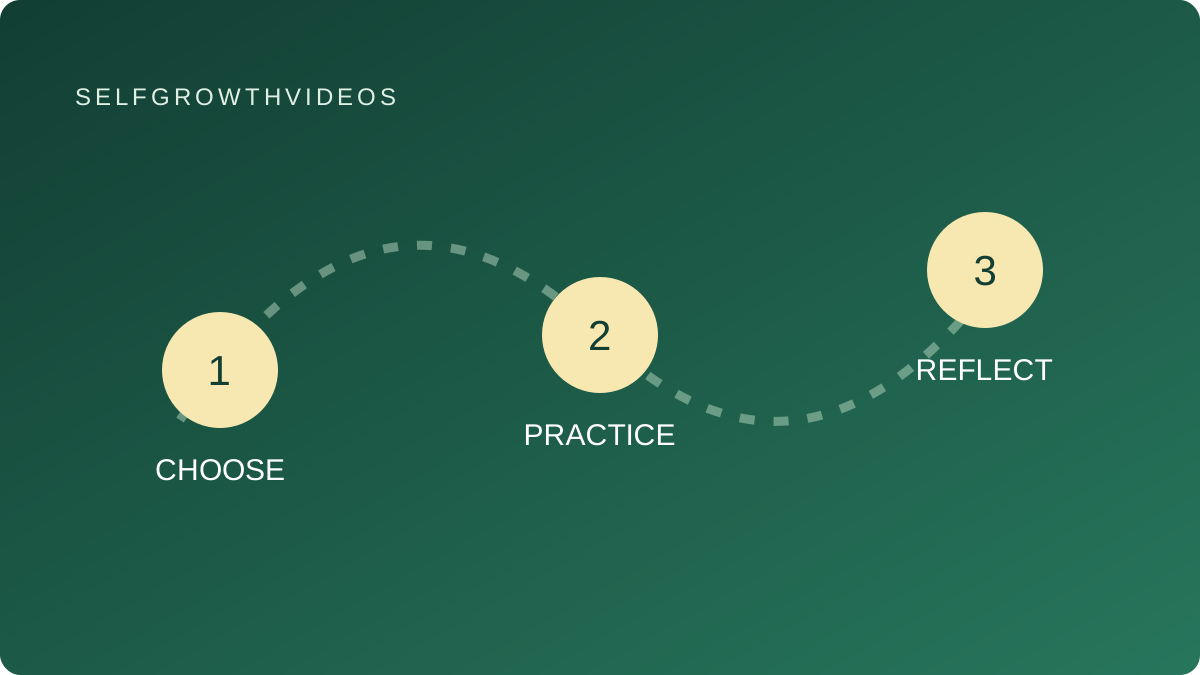 Choose, practice, reflect
A pause between commitments
The Lesson
You finish work, answer messages, handle a household task, and open another screen. You can list what you completed, but you have not asked what you need or whether the next activity deserves your attention. The day has a schedule; your own perspective has barely had a turn.
In the publisher’s excerpt from Homecoming, Dr. Thema Bryant invites a pause to consider the direction of your life and reconnect with your thoughts, needs, and wishes. Her official biography identifies her as a psychologist, author, and host of The Homecoming Podcast whose work brings psychology, spirituality, and social justice together.
For this lesson, bring the idea of a pause into an ordinary transition. You do not need to answer every question about your future. Begin with the part of today you can describe: what is occupying you, what you have been postponing, and what might deserve a little space before the next commitment.
A check-in can reveal two different kinds of information. You might discover a practical need, such as finding a quieter place to read. You might also notice a preference you have not expressed, such as wanting to spend time making something instead of automatically watching another show. Both can inform your next choice without requiring an immediate overhaul of your life.
Keep the difference between a need and an available response visible. If you want uninterrupted time but share a crowded home, deciding to concentrate harder may not solve the problem. Your response might be asking about a shared quiet period or finding a suitable public space. Other people’s needs and material circumstances still count.
This exercise stays with ordinary daily reflection. It does not assess mental health or ask you to revisit distressing experiences. If a question feels too personal, skip it. You can keep your notes private and stop when you have enough information for one modest decision.
Reflection
- Which transition in my day usually happens on autopilot?
- What ordinary need or preference have I been postponing?
- Am I choosing the next activity, or merely repeating it?
- What would give my own perspective a place in today’s plan?
Choose one transition you can actually notice, such as arriving home or clearing your lunch plate.
Practice
This is an original SelfGrowthVideos exercise inspired by the invitation to pause. It is not Dr. Bryant’s clinical method or an excerpted workbook exercise.
At your chosen transition, leave the next app or task unopened for a brief moment. Write three short lines:
What has my attention: Name one current concern or interest without trying to explain your entire day.
What deserves space: Identify one ordinary need or preference you want to acknowledge.
What I can do next: Choose an action, a request, or a planned time to return to the matter.
For example: “I keep thinking about the drawing class I bookmarked. I want room to explore making art. After dinner, I will read the class description and write down one question about the materials.” That response investigates an interest without committing you to a course or expense.
Another example might be: “The evening feels crowded. I would like time to read. I will ask whether we can agree on a quiet half-hour tomorrow.” The request may need discussion. Recording the need does not guarantee the arrangement.
End the note when you have one next step. You may also decide that tonight calls for rest and that the question can wait until a time you name. The check-in should be small enough to fit the life you actually have.
Review
At your next chosen transition, look back at the note. Did you act, ask, postpone deliberately, or forget? What did you learn about the need or interest? Change the timing or the next step if the original plan was unrealistic.
Do not grade the check-in by whether it produced a profound insight. A useful result may simply be noticing a preference before another automatic choice fills the available time.
Go Deeper
Explore the Dr. Thema Bryant teacher profile and Michelle Obama’s lesson on exploring a direction. When you have identified an interest worth trying, One Goal, One Week can help you design a small experiment.
Books on this topic
Books from this library that go deeper on the ideas in this page.

Some links on this page are affiliate links. As an Amazon Associate I earn from qualifying purchases. How affiliate links work here