Jack Canfield: Turn a Wish Into a Useful Information Request
What information should I ask for before committing to a goal?
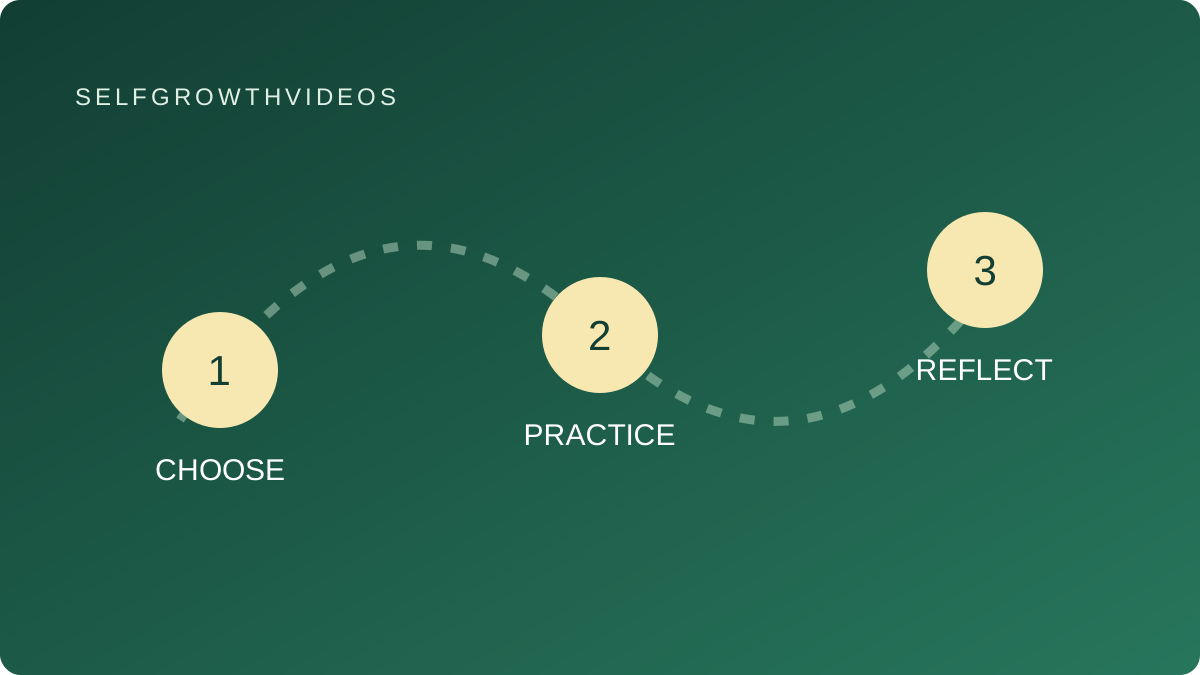 Choose, practice, reflect
A practical learning exercise
The Lesson
A wish can be sincere and still leave you without enough information to make a decision. You might want to learn bicycle maintenance, change your working hours, or join a community project. Before promising yourself a result, find out something about the conditions the goal would require.
Jack Canfield, author of The Success Principles and a co-creator of Chicken Soup for the Soul, makes asking part of his goal-oriented teaching. In Ask for What You Want, he invites readers to identify requests that could help a main goal and choose when to make them. For this lesson, apply that invitation to a request for information.
A useful information request gives someone a question they can reasonably answer. Compare asking a bicycle mechanic to tell you what to do with your life with asking what a beginner needs to know before attempting a particular repair. The second request has a subject, a boundary, and a connection to a decision.
Consider three kinds of information. Requirements concern what an opportunity actually asks of you. Experience concerns what somebody encountered in their own circumstances. Advice concerns what they think you should do. All can be useful, but they answer different questions. A person’s experience can suggest something to investigate; it cannot establish that your experience will match theirs.
You also need a respectful way to ask. Choose an appropriate public contact route, keep the request manageable, and leave room for the person to decline. An unanswered message gives you no new information about the goal itself. You may need a published resource or another suitable person.
Reflection
- What decision am I postponing because I lack information?
- Do I need a current requirement, an example from experience, or advice?
- Who is in a position to know, and what might be outside their knowledge?
- What could I find in an existing public resource before asking for someone’s time?
You do not have to settle your entire direction in one exchange. Aim to answer one decision-relevant question.
Practice
This is an original SelfGrowthVideos exercise, not Canfield’s prescribed worksheet or an endorsed method.
Write a wish, then the decision you are considering. For example: “I want to learn bicycle maintenance. I am deciding whether a beginner workshop would be a suitable starting point.”
List the information that decision needs. This might include assumed knowledge, tools, accessibility, schedule, and what the session actually covers. Mark what a current published description already answers. Choose one remaining question that would affect your decision.
Write a short request with these parts:
- Context: Say which opportunity or task you mean.
- Question: Ask for one specific piece of information.
- Boundary: Make clear that a short answer or an existing resource would be welcome.
A hypothetical request could be: “I’m considering your beginner maintenance workshop. Does it assume that participants already know how to remove a wheel? A course outline would also help if that answers the question.” This asks about a requirement; it does not request a whole training plan.
Before sending, check the current contact instructions and whether the answer is already available. Then ask once through an appropriate route, or use the published information if it resolves your question.
When an answer arrives, record who supplied it, when, and what it establishes. Separate their words from your interpretation. “The organizer says no prior wheel-removal experience is required” does not establish that every beginner will find the workshop easy.
Finish with a decision: proceed, investigate another condition, or reconsider. If you received no answer, record the information as unknown rather than filling the gap with a hopeful assumption.
Review
After the exchange, ask whether your question produced information you could use. Was it clear enough to answer? Did you ask the right source? What remains uncertain?
For your next request, improve one element: the subject, the boundary, or the choice of source. Keep the aim practical: enough reliable information for the decision in front of you.
Go Deeper
Explore Jack Canfield’s teacher profile and his official biography. To investigate an obstacle within an existing project, try Marie Forleo: Turn Stuck Into a Question. When you need practical assistance rather than information, use Courtney Dauwalter: Ask for Specific Support.