James Clear: Make the First Step Easier
You want to practice drawing after work.
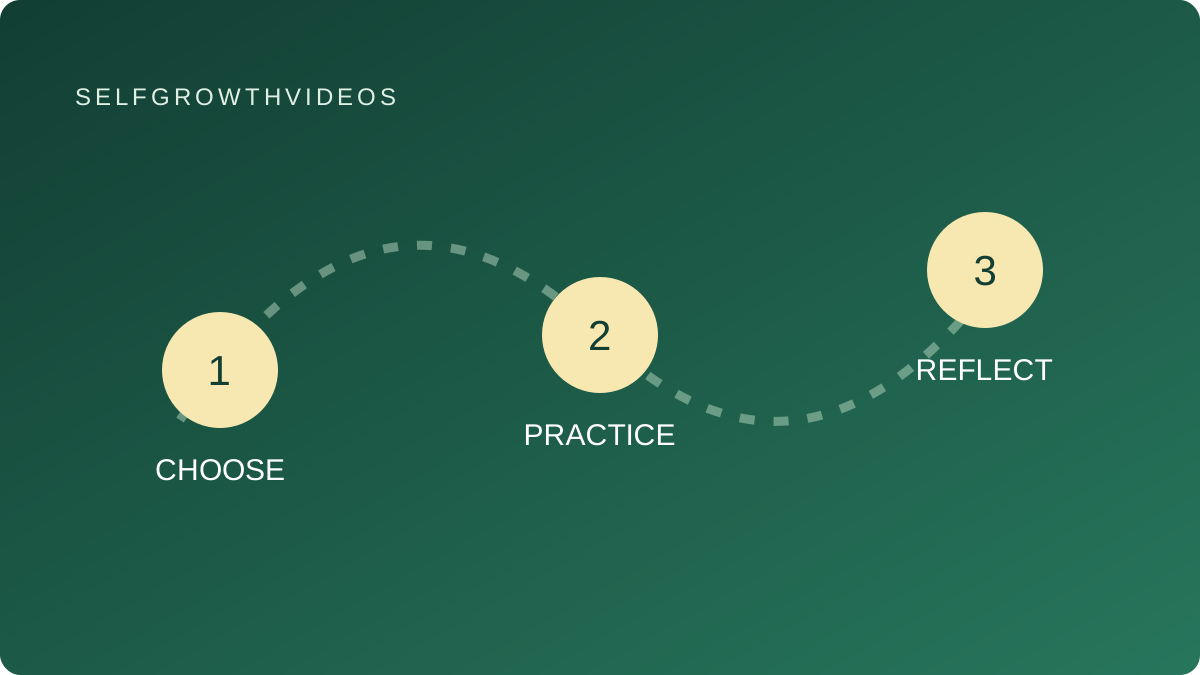 Choose, practice, reflect
A practical lesson
The Lesson
You want to practice drawing after work. But the paper is in a cupboard, the pencil needs sharpening, and your phone is already in your hand. Before blaming your commitment, look at the route from intention to the first pencil mark.
James Clear explains how the environment around an activity can make starting easier or harder. His practical suggestion is to reduce steps that obstruct desired behavior and add friction to distractions. Environment design. About James Clear.
A useful setup makes a specific action available when you need it. An open sketchbook does not draw for you, but it removes a decision and a search. The same approach applies to a reading session, a job application or an instrument practice. Choose a setup you can maintain without inconveniencing the people who share your space.
Separate preparation from performance. Today you can prepare the materials; at the next opportunity you can test whether the setup actually helps. If the obstacle turns out to be a missing skill, more visible equipment will not solve it. The experiment tells you what to address next.
Reflection
- What exact action do I keep postponing?
- What must I find, open or decide before I can start?
- Which one of those steps can I remove safely?
Practice
This is an original SelfGrowthVideos exercise inspired by the ideas above.
- Walk through your current starting sequence and write down each step.
- Choose one removable obstacle: put the document shortcut on your desktop, assemble the materials or write the first practice question.
- Arrange a modest starting station and leave a clear cue describing the action.
- At your next realistic opportunity, try beginning from that setup. Record what still gets in the way.
For drawing, place a pencil and one sheet of paper on a tray with the note: “Draw the outline of this mug.” Put the tray away after practice if the table is shared. The setup should help your life function, not create a permanent mess.
Review
After two attempts, compare the starting sequence with the old one. Did you begin more easily? If not, identify the remaining barrier and change one feature. Count an honest observation as useful information; this is not a test of your worth.
Go Deeper
Explore the James Clear teacher profile and the Habits learning hub. Choose one related idea to try before collecting more material.
For a broader introduction, explore Build Better Habits.
Books on this topic
Books from this library that go deeper on the ideas in this page.

Some links on this page are affiliate links. As an Amazon Associate I earn from qualifying purchases. How affiliate links work here