Jenny Shih: Choose One Result for a First Service Trial
Compare possible results, choose one useful stopping point and rehearse a fictional service sample.
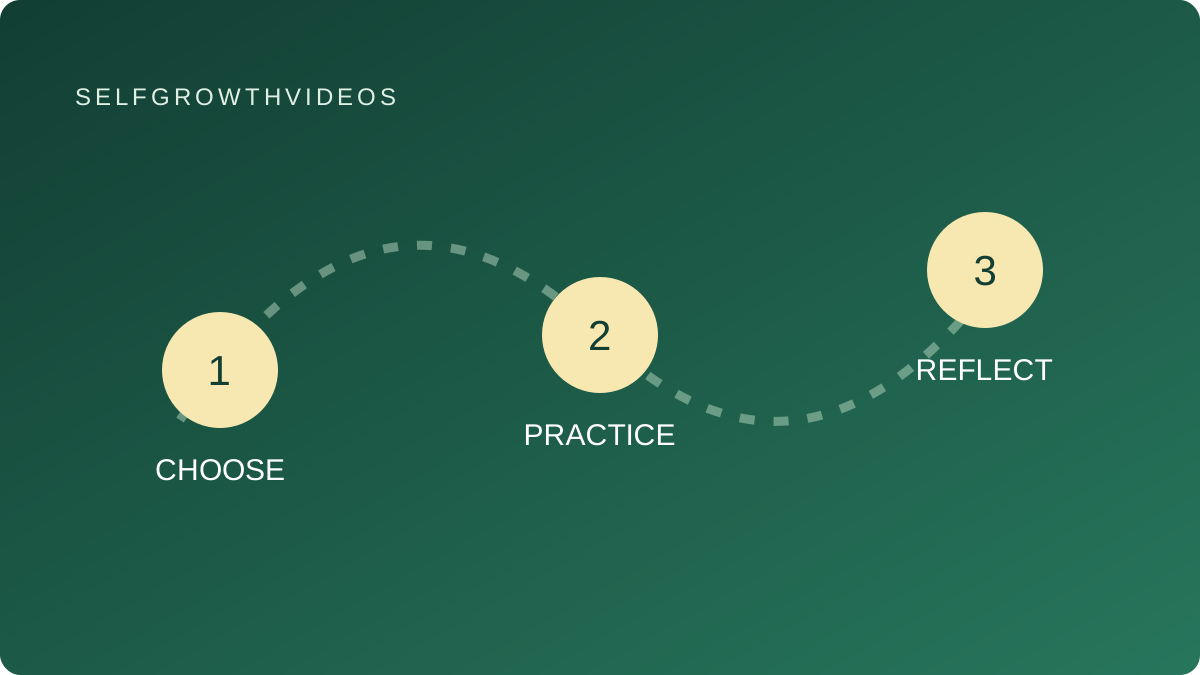 Choose, practice, reflect
A practical lesson
The Lesson
You want to offer a useful service, but the idea keeps expanding. Organizing a workshop becomes planning the event, writing every handout and managing future sessions. Before making that larger commitment, choose one result a person could actually use.
In her October 2024 Q&A, Jenny Shih recommends beginning with a small introductory service rather than immediately building a large program. She describes learning through serving clients and clarifies that her bite-sized offer idea does not require one universal price. This is her business perspective, not evidence that any particular offer will attract customers.
Use that historical teaching as a prompt to choose a first result. Shih’s current introduction describes her work with experienced business owners; this lesson does not claim that her earlier beginner programs remain available.
An area of skill is broader than a useful first job. You may know how to organize information, for example. Someone preparing a workshop might need a readable agenda, an ordered folder of handouts or a checklist of missing materials. These are different possible results. Bundling them together can hide the question of which one would be useful first.
Compare the alternatives before writing a sales description. For each possible result, ask what the recipient could do afterward that they cannot readily do now. An ordered handout folder might let them locate the right file during a session. A list of missing materials might let them decide what still needs preparing. A general promise to make the workshop better leaves more to interpretation.
A small result should have a sensible stopping point. The recipient should not need to buy another service simply to use the thing you described. This is a design question for your trial, not an instruction to underprice work or to offer unpaid work to strangers.
Keep a possible need separate from a confirmed request. You can make a fictional demonstration while you are still learning. Call it a demonstration. A friend understanding your sample does not establish that a customer wants to purchase it, and your enjoyment of the task does not establish demand.
Reflection
- What larger service am I trying to offer all at once?
- Which distinct results are hidden inside that description?
- What would a recipient be able to use immediately after one small job?
- Which part requires skills or permission I do not yet have?
Choose ordinary work you already understand. This practice does not qualify you to provide a regulated or specialist service.
Practice
Original SelfGrowthVideos exercise. This comparison and rehearsal are not Shih’s worksheet or an endorsed business method.
Imagine a volunteer organizer has six fictional workshop files with inconsistent names. There is no real customer and no private information. Consider three possible first results:
- A folder with the six files renamed and ordered for the session.
- A new set of handouts written from scratch.
- A complete system for managing every future workshop.
For each candidate, write what someone could use, what skill it calls for and what would mark the end of the job. Select one you can demonstrate with the information available. You may reject all three and name a missing skill instead.
If you choose the folder task, create six empty sample files with invented titles. Put them in a clear order, rename them consistently and add a short file key. Keep the originals so you can compare the starting state with the result.
Write a two-sentence trial description. Name the result and its stopping point. For example: “I will organize six supplied workshop files into one ordered folder and provide a file key. Writing new handouts and managing later workshops are separate work.”
Inspect the sample against that description. Can you locate each file using the key? Is an unfamiliar file clearly marked for clarification rather than silently assigned an invented purpose? Record one correction before considering a larger task.
Review
What did the rehearsal reveal about the result you chose? Perhaps the folder is useful but the naming rule needs explanation. Perhaps the organizer would need a different result first. Record what you observed and what remains a guess.
Decide whether to refine this sample, practice a missing skill or investigate the need further. Finishing a demonstration is useful progress; it is not a booking, payment or proof of a viable business.
Go Deeper
Explore Jenny Shih’s existing profile and Starting & Managing the Work. For the next delivery question, see Alex Hormozi: Separate a Service Promise From Delivery. To investigate a potential customer’s experience, use Marie Forleo: Listen Before Designing an Offer. The Business Launchpad’s first-customer module connects these tasks with the broader startup path.