Jocko Willink: Debrief a Project Handoff
How do we learn from a handoff that did not work as expected?
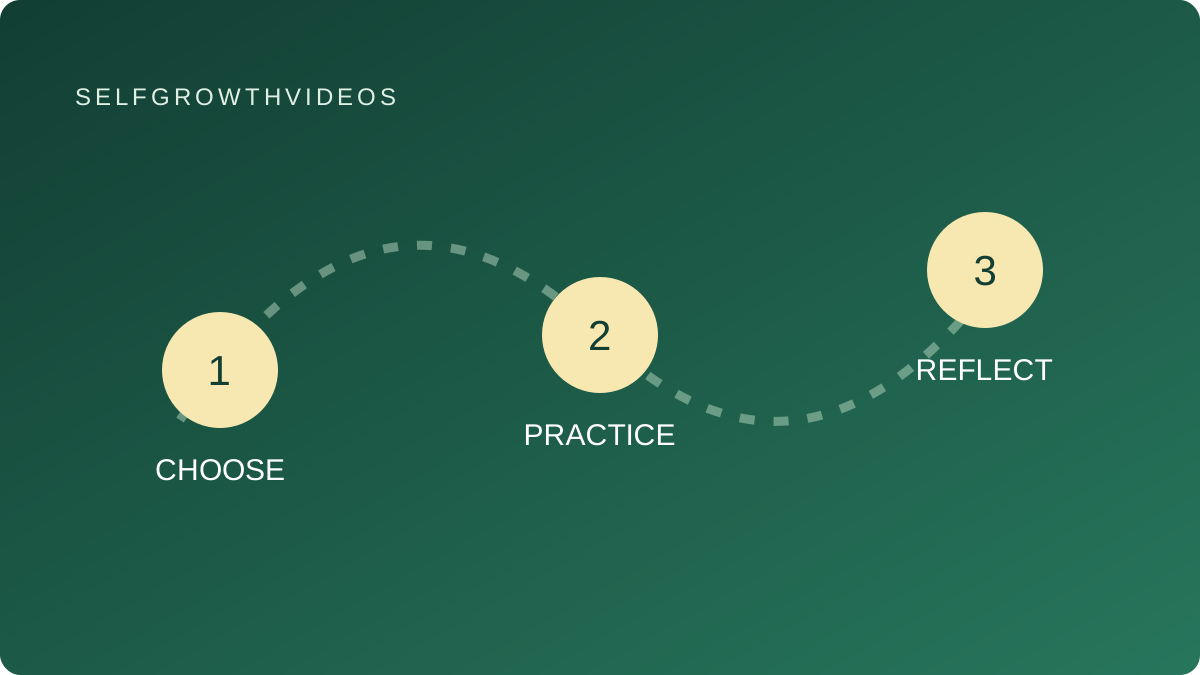 Choose, practice, reflect
A practical debrief exercise
The Lesson
One person finishes a piece of work, another starts the next stage, and something gets lost between them. Perhaps a study-group handout is printed from an earlier draft. Saying “We need to communicate better” names a concern, but it does not identify what to change. Review the point where the work changed hands.
Jocko Willink is a co-author of Extreme Ownership and a co-founder of Echelon Front, as documented in his official instructor biography. In its written guide How to Improve Team Performance, Echelon Front recommends discussing what worked and what could improve after shared work, taking notes, and giving less senior participants an early opportunity to speak. That guidance is published by the company; it is not presented here as a verbatim statement by Willink.
For this lesson, focus the review on one handoff. What did the sender believe they had supplied? What did the recipient believe they should use? Which part of the arrangement was recorded, and which part was assumed?
In the handout example, the sender may have uploaded a revised file while the recipient used an attachment from an earlier message. Both events can be described without deciding that either person is careless. You still need to establish what happened before choosing a remedy.
A useful debrief also preserves what worked. The content may have been ready on time, the printing may have been accurate, and the team may already have a convenient shared folder. Those details can inform a modest change rather than replacing the entire process.
Your own role deserves the same attention. If you sent two files with similar names, say so. If you were not involved in a particular step, ask about it. Taking responsibility for an available improvement does not require inventing certainty about every cause.
Reflection
- Which specific handoff are we reviewing?
- What evidence can we inspect, such as an agreed deadline or file version?
- Where might the participants have had different expectations?
- What part of the process should we keep?
- Who needs a chance to describe what they received?
Choose a small, ordinary project whose participants can discuss the work directly. Keep personal performance concerns separate from a group process review.
Practice
This is an original SelfGrowthVideos exercise, not an Echelon Front course worksheet or a method endorsed by Willink.
Invite the relevant participants to review one handoff. Explain the purpose and ask each person to prepare one thing that worked and one question about what could improve. Use information the group is entitled to share.
Draw a short timeline with three points: Ready to hand over, Sent or made available, and Received and used. At each point, write the expected action beside what the available evidence shows actually happened. Leave unknowns marked as unknowns.
Ask the people receiving the work to describe their experience before offering your explanation. If you lead the group, make room for others to speak before you propose a conclusion. Check whether the timeline represents their account fairly.
Identify one mismatch you can address. For the hypothetical handout, that might be uncertainty about which file is approved. A possible change is one clearly named final file in the agreed folder, with the recipient confirming which version they will print. That proposal still needs agreement from the people using it.
Record the change, who will try it, and the next handoff at which you will review it. Add one thing to retain, such as the existing deadline that gave the printer enough time. Avoid adding a long checklist when one clear change answers the problem.
Before ending, ask whether the plan resolves the mismatch the group identified. If accounts still differ, choose a fact to check before assigning a cause. A review can finish with a useful unanswered question.
Review
After the next comparable handoff, inspect the same point. Did the recipient receive and use the intended work? Was the new step practical, and did anyone need clarification?
Keep, revise, or remove the change based on that evidence. Note any new issue separately. The debrief is useful when it leads to a clearer shared process that people can actually follow.
Go Deeper
Explore Jocko Willink’s teacher profile. For reviewing your own learning attempt, try Serena Williams: Review an Attempt Without Making It Your Identity. If you need a focused outside perspective on the work, use Ask for Useful Feedback on a Project You Care About.