Lisa Nichols: Pair a Personal Story With a Useful Point
You are introducing a project or explaining something you learned.
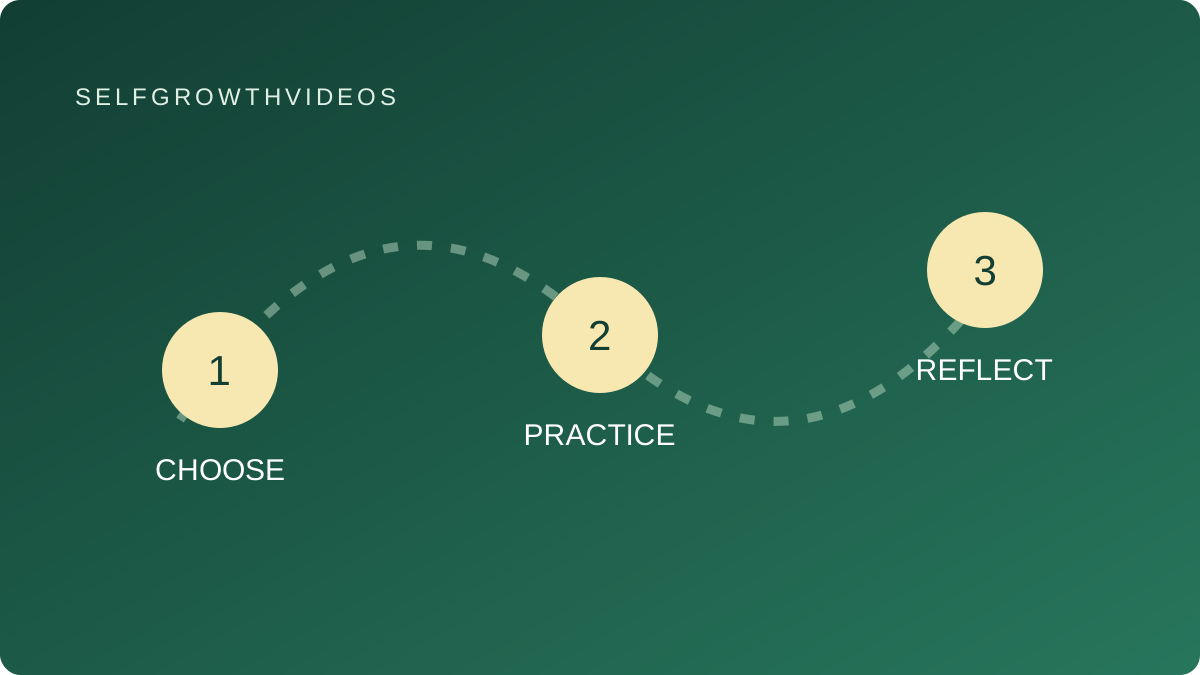 Choose, practice, reflect
A practical lesson
The Lesson
You are introducing a project or explaining something you learned. A string of advice feels flat, while a long personal story leaves listeners unsure what to do. Prepare one useful point and a short experience that helps people understand it.
Lisa Nichols distinguishes the information a speaker offers from the story that gives it context. In another official article, she encourages showing an experience through thoughts and feelings, rather than only reporting its outcome. Tips to Create a Powerful Message, Part 1. Two techniques for connecting with an audience.
Choose a story because it serves the message. You do not need your most painful experience or the most impressive moment of your life. An ordinary mistake, a question you asked or a small helpful exchange can provide enough context. Share only what you are comfortable sharing.
Keep the practical point visible. If the story describes getting lost on a first day at work, the point might be to ask where a meeting is held before leaving. The audience should be able to identify the lesson without having to guess why you told them about your day.
Reflection
- What should the listener understand or be able to do?
- Which ordinary experience gives that point context?
- Which details belong to someone else and should remain private?
Practice
This is an original SelfGrowthVideos exercise inspired by the ideas above.
- Write a single useful point for a specific audience.
- Choose a true experience that illustrates it, without inventing events or dialogue.
- Describe the situation, one thought or feeling and what you did. Keep it brief.
- State the practical point plainly afterward. Read the whole message aloud and remove details that distract from it.
To explain why you now clarify assignments, tell a short story about making the wrong version of a document because you had not asked who would use it. End by describing the question you ask now. Avoid identifying a colleague or presenting them as the villain.
Review
Ask a willing listener what they understood the point to be. Was the story connected to it? What detail helped, and what could be cut? Revise for clarity rather than measuring success only by praise or emotional reaction.
Go Deeper
Explore the Lisa Nichols teacher profile and the Storytelling learning hub. Choose one related idea to try before collecting more material.
Books on this topic
Books from this library that go deeper on the ideas in this page.

Some links on this page are affiliate links. As an Amazon Associate I earn from qualifying purchases. How affiliate links work here