Luvvie Ajayi Jones: Ask a Question When a Group Seems Certain
How do I ask a genuine question when everyone else seems certain?
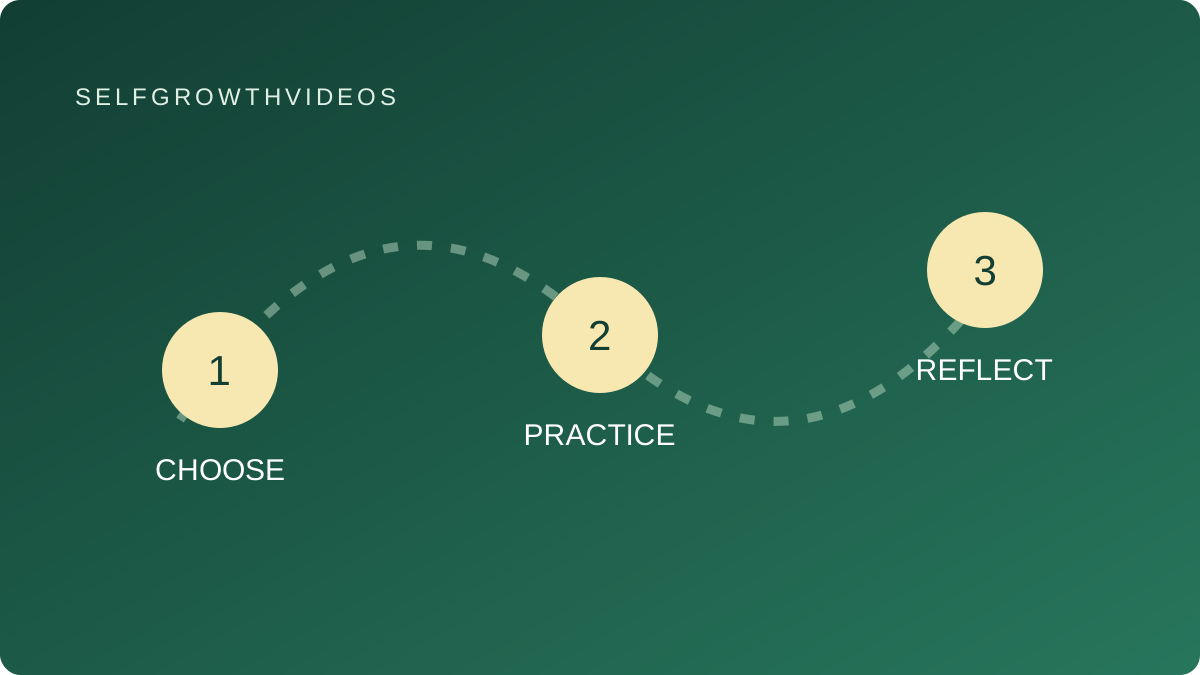 Choose, practice, reflect
A practical learning exercise
The Lesson
Your planning group quickly agrees to hold a workshop on Saturday morning. You are not sure how the time was chosen. Perhaps participants were asked. Perhaps the room is available only then. You do not yet have a complaint or an alternative proposal. You have a question.
In her conversation with Chris Duffy for TED’s How to Be a Better Human, Luvvie Ajayi Jones distinguishes constructive troublemaking from disruption for its own sake. She describes checking whether she means what she says, can defend it, and can express it thoughtfully. Her official Professional Troublemaker page identifies the book and its focus on acting despite fear.
One way to apply that emphasis on thoughtful purpose is to ask for information before treating apparent agreement as understanding. You do not have to manufacture a disagreement to contribute. Sometimes your useful contribution is finding out what the group already knows.
A genuine question leaves room for an answer you did not expect. “Why are we ignoring everyone’s schedule?” has already assigned a failure. “What did we learn about participants’ availability?” asks for the basis of the decision. You can then consider the answer instead of defending a conclusion you made too early.
Name the gap in your understanding. “I may have missed this: what led us to Saturday morning?” tells the group what you need. It also allows someone to point you to an earlier discussion or explain a practical limit. You are asking to join the reasoning, not requiring the group to start over.
Choose a question that matters to the decision. Curiosity can become a detour if it opens every possible topic. If the group is deciding a time, ask about availability or room access. Save a separate question about the workshop’s design for the relevant discussion.
Listen before adding the next question. Restate what you understood and check it: “So the room is available then, but we haven’t asked the attendees yet. Have I got that right?” Your first question may reveal that you misunderstood the situation, or that one piece of information remains missing.
There is no requirement to question a group in public when doing so carries serious personal risk. You can seek an appropriate person, channel, or support. The goal of this ordinary practice is understanding a shared decision, not proving courage through exposure.
Reflection
- What do I actually not understand?
- Am I open to an answer that supports the current plan?
- Does my wording ask for information or hide an accusation?
- How will I show that I heard the answer?
Practice
This is an original SelfGrowthVideos exercise. It is not a questioning method prescribed by Jones and does not imply her endorsement.
Use a modest group decision or rehearse with a willing partner.
- Write the decision in neutral language.
- Write the missing information you want to understand.
- Turn it into one question without claiming another person’s motive.
- Ask at a suitable moment, then let the person answer.
- Restate the answer in your own words and check whether you understood it.
- Record what is now clear and what, if anything, still needs clarification.
For the workshop, the question could be: “What information did we use to choose Saturday morning?” If the answer is that only the room’s availability was checked, your follow-up might be: “Who can ask likely participants whether that time works?”
If you learn that attendees already selected the time, acknowledge the new information. You do not need to invent a second objection to justify having asked.
Review
After the conversation, note whether your question received an answer and whether you understood it accurately. Did you interrupt, add an accusation, or move to an unrelated topic? What wording would you keep or change?
If information remains missing, identify who will clarify it and when the group will revisit the decision. If the answer was enough, let the question close. Inquiry is useful when it improves understanding, even when the original plan stays the same.
Go Deeper
Explore Luvvie Ajayi Jones’s teacher profile and the Courage learning hub. When you have already observed a concrete problem, use Prepare to Raise a Useful Concern. For staying with another person’s answer, try Dale Carnegie: Ask One Genuine Follow-Up.