Marie Forleo: Give Each Newsletter Paragraph a Job
Map the purpose of each paragraph, preserve the essential details and park ideas for a later issue.
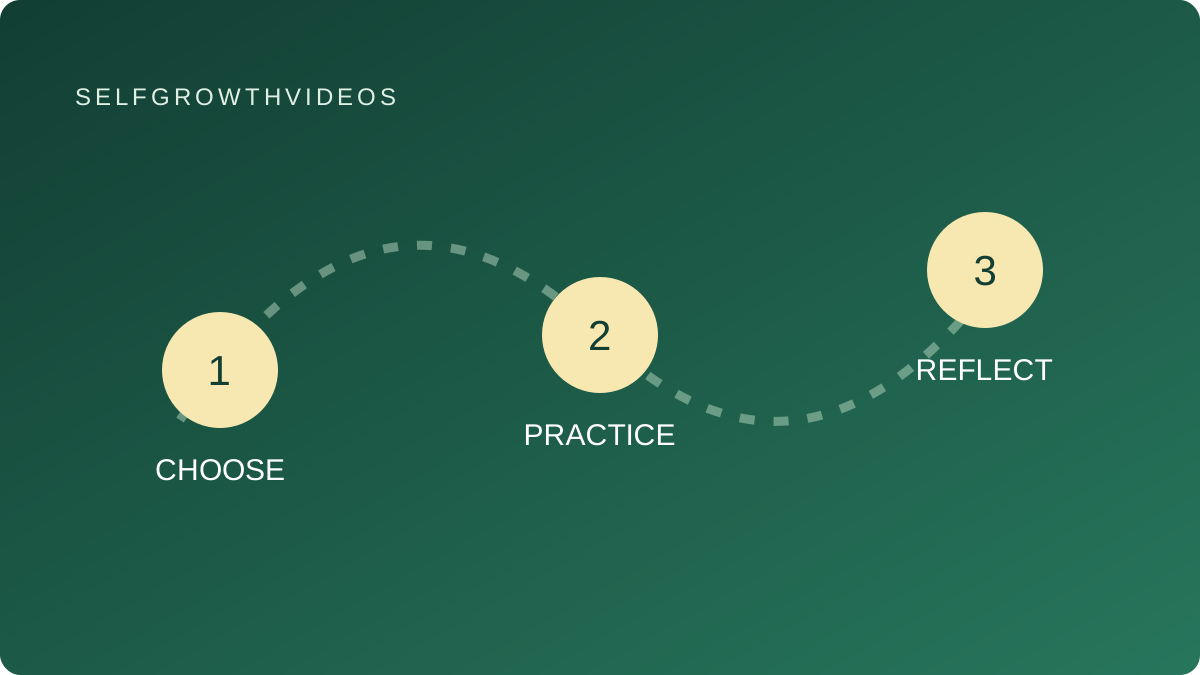 Choose, practice, reflect
A practical lesson
The Lesson
Your newsletter draft starts with an update, wanders into an interesting story and ends with two unrelated requests. Each paragraph may read well on its own. The editing question is whether they belong in the same issue and help the reader do what this issue promises.
In the opening teaching segment of her official writing compilation and transcript, Marie Forleo advises deciding what the reader should take away, keeping a topic list and giving one idea room to be useful. She also distinguishes drafting from editing. Her official about page identifies her as an entrepreneur, speaker and writer. These are practical writing suggestions, not a guarantee of faster work or a particular audience response.
Use the intended reader result as an editing standard. Instead of starting with “make this shorter,” write what this issue must help someone understand or do. A detail that serves that result may deserve space. A lively paragraph about something else may belong in a later issue.
Then label the job each paragraph is doing. It might introduce the purpose, give essential details, explain a reason or ask for an action. If you cannot name its job, examine it before polishing individual sentences. This gives you a structural editing task: decide where the material belongs, then work on its wording.
Keep a place for material you remove. Parking a promising idea in a separate note preserves it without making the current issue carry every topic at once. It also helps distinguish removing a digression from deleting information the reader still needs.
For the fictional draft below, the reader needs to know when and where to return a borrowed item. A separate request for future newsletter topics can wait. That is an editorial choice for this particular brief, not a rule that newsletters must always contain one announcement.
Reflection
- What did this issue promise the reader?
- Which details are essential to the action?
- Does each paragraph support that purpose, or begin a different conversation?
- What could move to a future-ideas note without losing necessary context?
- Am I cutting a useful detail merely to reach an arbitrary length?
Practice
Original SelfGrowthVideos exercise: give each newsletter paragraph a job. This fictional brief, paragraph map and revision are ours, not Forleo’s worksheet or an endorsed newsletter formula. Work privately in a document; do not send a newsletter or collect addresses.
- Write the brief. A fictional neighborhood tool club wants borrowers to find the next return session. For this rehearsal, the supplied facts are Saturday, 10:00 to 11:00, at the community-room desk. Borrowers should bring the borrowed item with its club label attached. There is no supplied contact address, alternative return arrangement or promise of an extension.
- Make a deliberately mixed draft. Use four paragraphs: P1 says the club has been busy and thanks volunteers. P2 tells a story about repainting a chair. P3 gives the return-session details and asks readers to bring the labeled item. P4 asks readers to suggest topics for a future newsletter. These are practice descriptions you can expand into your own sentences.
- Map before rewriting. Beside each paragraph, write its current job and an editing decision. P3 contains the required information and action. P1 could become a short opening if it helps introduce the reminder. P2 starts a separate story; park it as a possible project feature. P4 begins a second request; park it for an issue devoted to reader suggestions.
- Build the revised structure. Put a clear return reminder first, followed by the essential session details and what to bring. For example: “Tool return reminder: bring your borrowed item with its club label attached to the community-room desk on Saturday, 10:00 to 11:00.” Add a brief thank-you if it supports the tone. Do not invent a room number, email address or late-return rule to make the message feel more complete.
- Keep an editing record. Save the original paragraphs, the revised version and a parking note containing the chair-story and topic-request ideas. Beside each move, explain the reader need it serves. This record should show the difference between improving the current issue and simply throwing material away.
- Check the result against the brief. Underline when, where and what to bring in the revised version. Confirm that Saturday, the time window, the desk location and the club label are still present. Compare the opening with the intended action. If your edit reads smoothly but loses the location, repair that omission before making another stylistic change.
If a willing reader is available, give them only the revised fictional note. Ask where and when they would return the item and what they would bring. Record their answers before explaining your intention. A wrong or uncertain answer identifies a place to inspect; it does not measure the success of a real newsletter campaign.
Review
Did the paragraph map help you choose what belonged in this issue? Which parked idea could become a separate useful piece, and what new brief would it need? Keep that idea separate until you decide to develop it.
On your next private practice, try a different purpose, such as explaining one change to a club process. Map the paragraphs before editing their sentences. Compare what the reader needs with what your revision actually supplies. You are practicing structural judgment, not chasing a promised open rate, income result or universal word count.