Maya Angelou: Revise a Sentence in Your Own Voice
How do I revise a sentence so it sounds like something I mean?
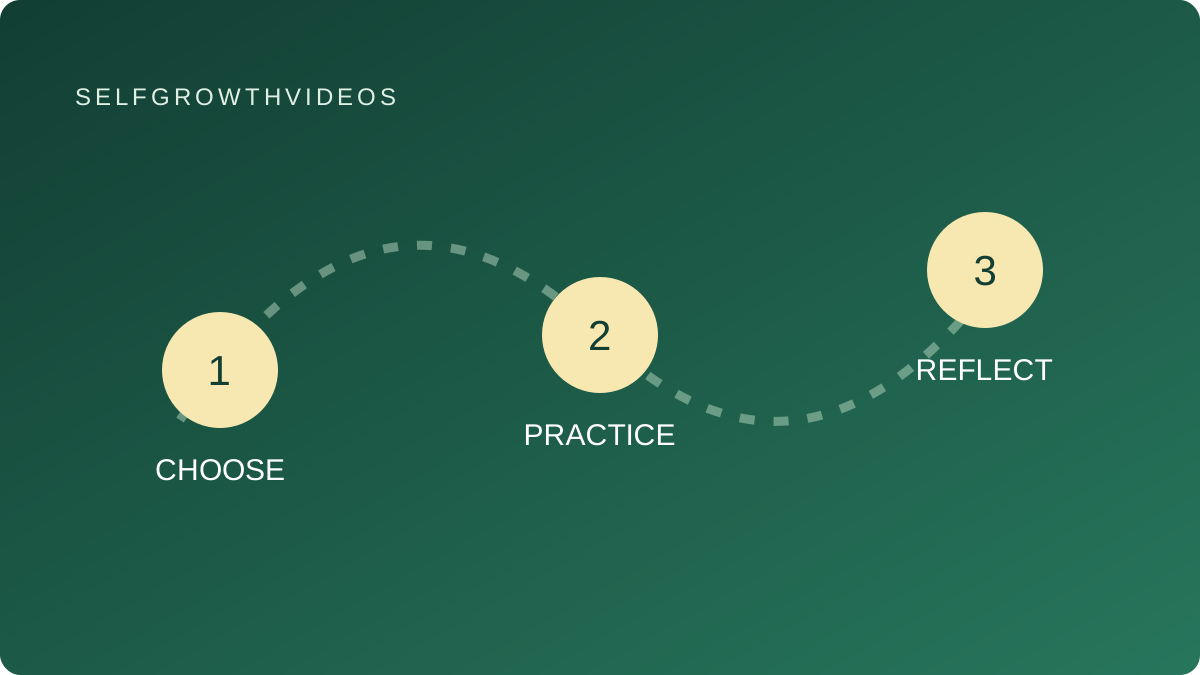 Choose, practice, reflect
A sentence-revision exercise
The Lesson
You write a paragraph about something you noticed. One sentence sounds polished, but it does not sound like something you would choose to say. Before replacing it with another impressive phrase, ask what you mean and how the words carry that meaning.
In her Paris Review interview with George Plimpton, Maya Angelou discusses reading aloud to hear language and rhythm, while seeking particularity and originality rather than imitation. She also describes revision as substantial work. Her publisher’s page for I Know Why the Caged Bird Sings identifies her memoir and other writing.
Treat your own sentence as material you can work with. Revision can change its sound, emphasis, or pace. It need not make the writing more formal. The choice depends on the thought, the reader, and the kind of piece you want to make.
First state the meaning plainly. Suppose your draft says, “The magnificent arrival of morning bestowed renewed optimism upon my weary spirit.” Perhaps you mean, “When the kitchen grew light, I felt ready to begin again.” Those sentences make different choices about detail and tone. Neither is automatically the right one for every writer.
Listen for where the emphasis falls. A long opening may delay the action. A series of short sentences may give each observation similar weight. Changing the order can bring a different detail forward. You can hear the sentence aloud, quietly mouth it, or attend to its rhythm as you read in whatever way works for you.
Keep the meaning under review as you change the language. A vivid word may also add a claim you did not intend. “Everyone cheered” says something different from “I heard cheering behind me.” In writing about actual experience, an attractive sentence does not make an uncertain detail true.
Your voice can change with purpose and audience. A friendly note, an essay, and a set of instructions need not sound identical. For this practice, your task is to choose a sentence you can stand behind and explain, rather than discover one permanent style for all your writing.
Reflection
- What do I want this sentence to communicate?
- Which words feel chosen, and which feel borrowed or automatic?
- Where do I want the reader’s attention to land?
- Has a change in language also changed the claim?
You can admire another writer’s attention to language without trying to reproduce their recognizable voice.
Practice
This is an original SelfGrowthVideos exercise. It is not a revision method prescribed by Angelou and does not imply her endorsement.
Choose a sentence from a short piece you wrote. Save the original. Under it, write the meaning in plain words, then make two alternatives:
- Word choice: Keep the basic structure but replace a vague, automatic, or unnecessarily elaborate phrase with words that fit your intention.
- Rhythm: Keep the meaning but change the order, length, or punctuation to place emphasis where you want it.
For example, an original sentence might be: “I was experiencing considerable uncertainty about taking the first step.” A word-choice version could be: “I wasn’t sure how to begin.” A rhythm version might be: “I wanted to begin. I didn’t know where.” The last version adds an explicit desire, so keep it only if that desire is part of what you mean.
Read the alternatives in the surrounding paragraph. Which one belongs there? Explain your choice in a short note about meaning, tone, or pace. You may keep the original if it serves the piece best.
Make one final pass for accuracy. Preserve any uncertainty in a remembered event, and do not replace another person’s recorded words with your revised wording. This exercise works on your own prose.
Review
Return after a break and read the paragraph again. Does the revised sentence still convey the meaning you intended? Does its emphasis fit what comes before and after it?
Record one choice you want to notice in future writing, such as where you place the main action. Then let this version rest. A useful revision is a considered choice, not a requirement to keep changing the sentence forever.
Go Deeper
Explore Maya Angelou’s teacher profile and the Storytelling learning hub. If you need material to revise, begin with Maya Angelou: Write One Ordinary Scene. For shaping a brief message around a useful point, try Lisa Nichols: Story and a Useful Point.