Nedra Glover Tawwab: Check Before Offering Advice
How do I find out whether someone wants advice before I start giving it?
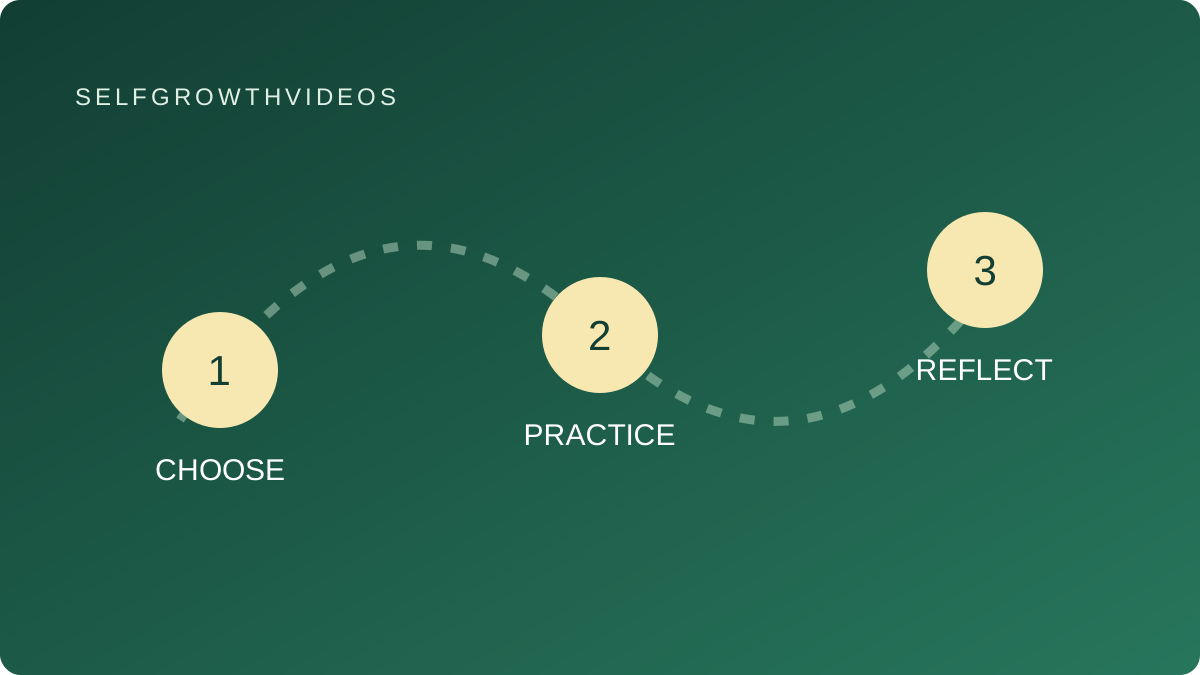 Choose, practice, reflect
A conversation exercise
The Lesson
A friend tells you that their evening class is frustrating. You immediately have suggestions: change groups, email the teacher, try a different course. Before you deliver the plan, there is a useful question to ask: what kind of conversation does your friend want?
In TED’s transcript of her conversation with Chris Duffy, Nedra Glover Tawwab questions setting relationship goals for someone who has not said they want those changes. Her official biography identifies her as the author of Set Boundaries, Find Peace and Drama Free. We apply that concern for another person’s choices to everyday advice between peers.
Someone sharing a difficulty may want company, a chance to describe it, practical information, or ideas. You cannot reliably tell which response they want from the existence of the difficulty alone. Ask before making their next decision the subject of your advice.
A simple opening is: “Would you like me to listen, or would ideas be useful?” Offer that as a real choice. If they prefer listening, do not quietly turn the next sentence into a recommendation. Let them describe the situation, and ask a question that helps you understand what they mean.
If they want ideas, clarify the question. A friend may want help finding the course timetable, while you are preparing an argument for leaving the course. Those are different requests. “Which part would you like ideas about?” can prevent you from solving a problem they have not asked you to solve.
An invitation to offer advice is also limited. Being asked about one practical step does not appoint you to manage the person’s schedule, monitor their progress, or announce their decision to others. Keep the response within the conversation they agreed to have.
You can disagree respectfully. If a suggestion does not fit, ask what you have misunderstood instead of treating resistance as proof that the person is unwilling to improve. They know circumstances you may not know. They may also decide to leave the matter alone for now.
Reflection
- Did the person ask for advice, or did I infer that request?
- What do I actually understand about the difficulty?
- Am I trying to help with their question or relieve my own urge to fix something?
- Could I accept a different decision after offering my perspective?
Use these questions for an ordinary conversation between peers. A brief frustration does not give you enough information to label the person’s character or relationships.
Practice
This is an original SelfGrowthVideos exercise. It is not a script prescribed by Tawwab and does not imply her endorsement.
Recall a recent everyday conversation in which you began giving advice quickly. Keep the other person’s details private. Write down the point where you could have checked what they wanted.
Prepare one question in your own voice: “Do you want to talk it through, or are you looking for suggestions?” You can offer another option if it fits, such as looking up a piece of information together. Avoid a long menu that makes them manage the whole exchange.
At the next suitable moment, ask the question and leave space for an answer. If the person wants listening, respond to what they actually say. If they want ideas, clarify one question and offer a suggestion as an option, with any uncertainty you have.
For example: “I know where the timetable is, but I don’t know the rules for switching groups. Would finding those rules be useful?” That leaves the decision with your friend. It also describes the limits of your knowledge.
If you have already launched into advice, you can pause: “I started suggesting things before asking. What would be useful from me right now?” Follow the answer rather than defending the advice you already gave.
Review
Afterward, review your own behavior. Did you ask a genuine question and honor the answer? When you had permission to offer ideas, did you stay with the question the person chose?
You do not need to track whether they followed your suggestion. The practice is checking the kind of response they want and respecting their choice. If you misunderstood, acknowledge it and adjust in the next conversation.
Go Deeper
Explore Nedra Glover Tawwab’s teacher profile. Practice staying curious with Dale Carnegie: Ask One Genuine Follow-Up. If you are the person asking for help, Courtney Dauwalter: Ask for Specific Support offers a related exercise.