Priya Parker: Give a Workshop Helper One Clear Role
Connect one voluntary helper role with the workshop's purpose, then rehearse its cue, task and handoff using fictional arrivals.
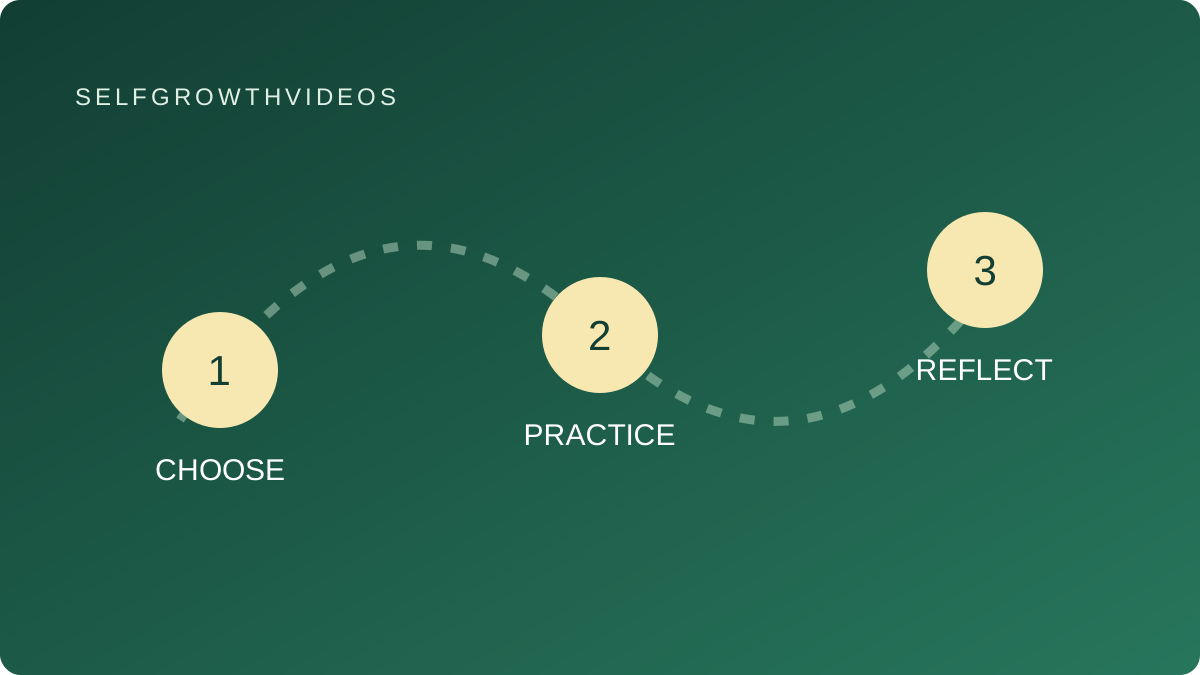 Choose, practice, reflect
A practical lesson
The Lesson
“Can you help at the workshop?” leaves a willing person with a lot to infer. They may not know when to begin, what they can decide or whom to ask when something is missing. A useful role explains how a small contribution supports the gathering and where responsibility returns to the host.
In her official newsletter on getting buy-in, Priya Parker describes sharing a bounded part of a gathering with other people and listening to their reservations. She connects participation with people understanding a role and wanting to take it. Her official biography identifies her work as a facilitator and writer.
Apply that idea to one modest workshop task. A helper could welcome arriving participants and offer a blank practice card. That contribution supports an activity people are about to do together. It does not automatically make the helper responsible for booking questions, teaching the session or deciding what happens when supplies run out.
Separate willingness from clarity. Someone can want to help and still need more information. Asking what part of the role feels unclear gives you a chance to adjust it before the event. If the person does not want the role, find another arrangement rather than treating the written instructions as their agreement.
For planning purposes, a short role card can name the purpose, the start cue, the action, the boundary and the handoff. The card is our editorial tool for this exercise. It is useful only if its contents match the workshop and the person taking the role understands them.
Reflection
- Why does this task matter to the activity people will do together?
- What tells the helper to begin and to finish?
- Which question or problem should return to the host?
- What would I change if the helper is uncertain or declines?
Practice
Original SelfGrowthVideos exercise: This role-card rehearsal applies a participation idea to fictional workshop logistics. It is not Parker’s proprietary worksheet or an endorsed event-management method. No real event, booking or volunteer recruitment is required.
- Describe a sample session. Imagine a small workshop where people practice writing a clear instruction on a blank card. The host leads the activity; the helper’s proposed contribution is to welcome people and offer the practice cards.
- Write a voluntary role offer. Explain the task and ask whether the person wants to do it and what needs clarification. For a solo rehearsal, write the questions you would ask rather than inventing someone else’s agreement.
- Draft the role card. Purpose: help participants arrive ready for the card activity. Start cue: the host says the room is ready for arrivals. Action: welcome each person, offer one blank card and point to the host for activity questions. Boundary: do not promise a place, change the session plan or guess an answer about the event. Handoff: tell the host when cards or information are missing.
- Walk through an ordinary case. Use a fictional arrival. Can the helper follow the card from the start cue through the welcome and material handoff? Check whether the host has actually said where the blank cards are kept. Add that location if it was missing.
- Try an exception. Imagine the card supply is empty when someone arrives. The helper should be able to locate the host and explain the problem. If the instructions instead require them to improvise materials or make a promise, narrow the role or agree that additional responsibility explicitly.
- Ask for an explanation back. A willing practice reader can describe when the role starts, what it includes and where they would hand a problem back. Invite them to identify a part they would change or decline. Revise the card and keep the unanswered questions beside it.
The exercise can finish with a ready card or with a finding that the role is not ready. For example, “The host is teaching and cannot receive questions during arrivals” is a planning problem to resolve, not something the helper should silently absorb.
Review
Did the rehearsal reveal a missing material, an unavailable host or a decision you had not assigned? Check the handoff as carefully as the welcome. Naming a responsible person is not enough if the helper cannot reach them when needed.
Keep the role small enough to review and adjust it with the person involved. One clear card does not establish that the whole workshop is ready or guarantee engagement. It can make one piece of the logistics easier to discuss and rehearse.
Go Deeper
Explore Priya Parker’s profile, writing a clear workshop invitation and closing a peer meeting with purpose. Return to Events & Hospitality Support for related planning topics, or Tutoring & Learning Support for the learning activity itself.