Seth Godin: Choose a Specific First Audience for Your Side Project
How do I choose who a side project is for when I could make something for almost anyone?
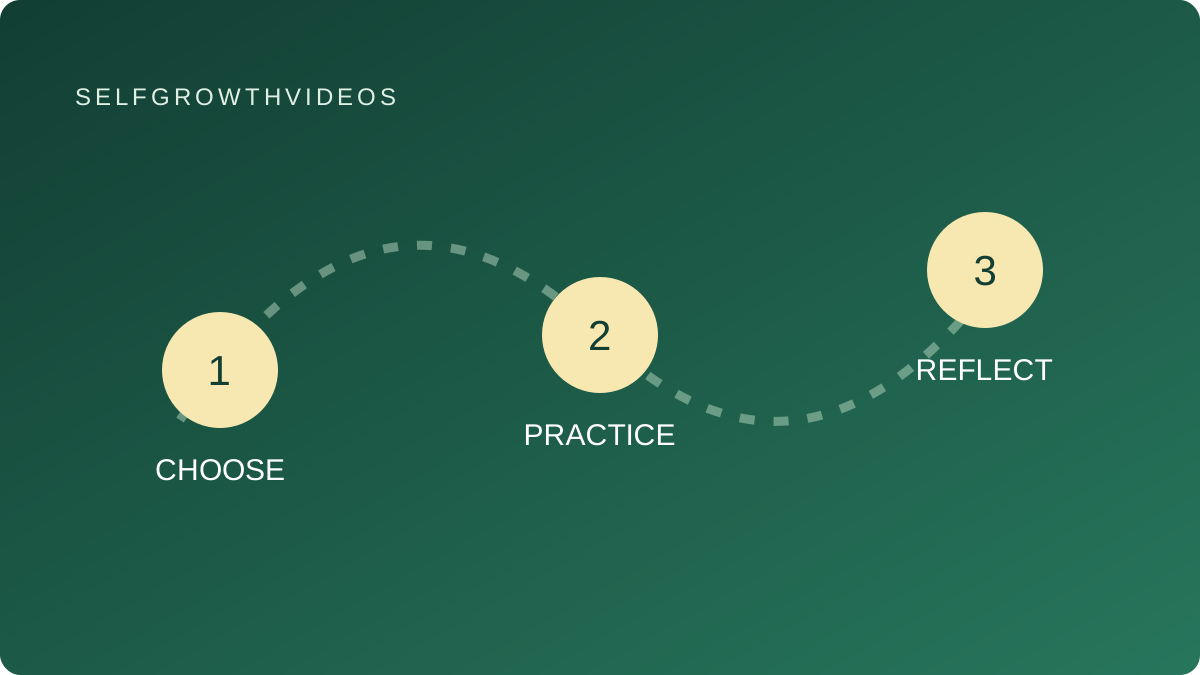 Choose, practice, reflect
A practical learning exercise
The Lesson
An idea such as “I will make templates for businesses” leaves many decisions open. A shop preparing its first craft fair needs different information from a consultant delivering a research report. Until you choose a situation, it is difficult to decide what belongs in your sample or who could give you useful feedback.
In In search of the minimum viable audience, Seth Godin argues for concentrating on a small market you can serve well. His book This Is Marketing develops an approach to marketing centered on people’s needs, empathy and positioning. These are ways to focus the work; choosing a narrow audience does not establish demand or guarantee sales.
A useful first audience is more specific than a demographic label. Describe what the person is trying to do, when the problem occurs and what they use now. “New craft sellers preparing a stock list for their first event” gives you a starting task. “Anyone who wants to be successful” does not help you choose columns for a spreadsheet.
Keep that description provisional. You may discover that sellers already have a suitable tool, that the real difficulty is photographing products, or that you cannot yet make a useful improvement. An audience brief is a question you can investigate, rather than evidence you have found customers.
You also need a boundary around your work. A stock-list sample might organize item names, quantities and a space for notes. It need not become an accounting product, an inventory platform or a promise to increase revenue. Specificity makes the first version easier to explain and review.
Reflection
- What situation do I understand well enough to describe without guessing?
- What does the person need to do next, and how do they do it now?
- Which part could I demonstrate honestly with my present skills?
Practice
Original SelfGrowthVideos exercise: write a first-audience brief. This worksheet is our exercise, not Godin’s named method or an endorsement.
- Complete: “This sample is for people who are ___ and need to ___.” Describe a task and situation, rather than claiming a personality or income level.
- Write three columns: what I have observed, what I assume, and what I need to ask. Keep actual evidence separate from your interpretation.
- Describe one small deliverable and one thing it will not do. For the craft seller, that could be a printable stock sheet that does not calculate tax or predict sales.
- Create a fictional example. Show it to a willing person familiar with that situation, explain that it is a practice sample and ask which part helps or confuses them.
- Save the response in their own terms, with permission. Decide whether the audience description or the sample needs to change.
No purchase, public launch or paid software is required to complete this practice.
Review
After the feedback, ask: could the person recognize the task without a long explanation? Which assumption changed? Did you make the sample more useful for that situation, or just more elaborate?
Choose one next step: revise the sample, speak with another willing person, learn a missing skill or set the idea aside. One conversation can inform a next question; it cannot show how an entire market will respond.
Go Deeper
Browse digital products and resources, creator businesses and content marketing. Continue with Marie Forleo’s customer conversation lesson or visit Seth Godin’s profile and video library.