Tabitha Brown: Offer Encouragement That Names Something Real
How do I offer encouragement that names something specific?
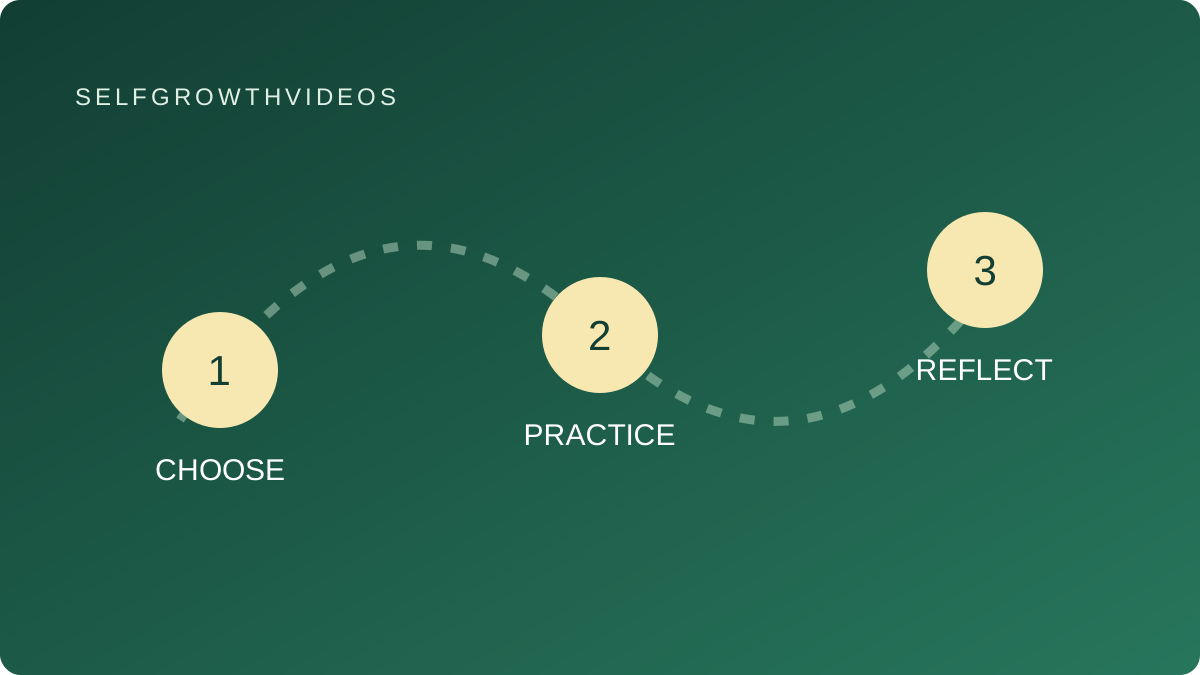 Choose, practice, reflect
A practical encouragement lesson
The Lesson
A friend finishes a first presentation and says it went badly. You want to help, so you say, “You’re amazing. Everything will work out.” Your intention is kind, but you have not said what you noticed, and you cannot know what happens next.
Try a smaller, more honest message: “When you explained the unfamiliar term with an example, I could follow it. I appreciated that.” You have recognized something real without giving a verdict on the whole presentation or making a promise about the future.
A starting point in Tabitha Brown’s work
In the official Food Network Obsessed interview transcript, Brown describes what she appreciates about a fellow cook: technical knowledge, exchanging ideas and encouraging the chefs. Her appreciation includes things the person does, rather than praise alone. Read Brown’s conversation with Jaymee Sire.
Tabitha Brown’s publisher describes kindness and love toward oneself and others as themes of Feeding the Soul. The official activity guide accompanying her children’s book Hello There, Sunshine asks readers to think of actions that could brighten another person’s day. These offer a simple starting point: make kindness something you can choose to do. Explore Brown’s books and their resources, including the publisher’s kindness activity guide.
For an adult conversation, one possible action is a specific word of encouragement. The practice below is original SelfGrowthVideos material, not Tabitha Brown’s worksheet or a communication method she prescribes. Her inclusion here does not imply endorsement of this site.
Name what you actually know
An encouraging message can begin with an action you witnessed: someone asked a careful question, explained a difficult point, made space for another person to speak, or returned to a piece of work to revise it.
Describe that action plainly. Then, if it is true, say what it meant to you. “You paused to explain the instructions again; I felt comfortable asking my question” is different from “Everyone thinks you’re a wonderful leader.” The first describes your experience. The second speaks for people whose thoughts you may not know.
You also do not need to turn every action into a permanent identity. Someone can make a thoughtful choice without having to become the person who is always thoughtful, always strong or always available.
Leave room for a difficult day
Encouragement does not require you to persuade someone that a disappointment is good. If a friend says they are upset, you can acknowledge that before offering an observation: “That sounds disappointing. One thing I noticed was how clearly you explained your example.” Both parts can be true.
Keep advice separate. A supportive message need not end with a list of improvements or an instruction to try again immediately. If they ask for help reviewing the work, you can have that conversation together. If they want to stop talking about it, let them.
Choose the setting with care, too. A quiet message may suit someone better than public praise. Ask before sharing their work, personal story or goals with other people.
Reflection
Think of one person you would like to encourage.
- What action did I observe directly?
- What can I honestly say about its meaning to me?
- Am I offering recognition, or trying to get them to make the choice I prefer?
- Would this person welcome a message now, and would they prefer it privately?
If you cannot name an observed action, do not invent one. You can simply offer company: “I’m here if you’d like to talk.”
Practice
This is an original SelfGrowthVideos exercise. Draft one short message privately before deciding whether to use it.
- Describe an action. Write one sentence beginning with “I noticed…” Use a concrete detail rather than a guess about the person’s character or private feelings.
- Add your experience. If you have something true to add, explain what you appreciated or how the action helped you. Do not speak for an entire group.
- Remove the demand. Read the message for hidden instructions: “Keep it up every day,” “Don’t be sad,” or “Now you have to…” Delete anything that makes your kindness depend on their next performance.
- Choose whether and how to share. A brief conversation or private note may be enough. You can also leave the draft unsent if the timing or relationship makes it unwelcome.
For example: “I noticed you made room for the quieter people to speak during our study group. I appreciated being able to finish my thought.” There is no requirement for the recipient to reply, agree with you or return the compliment.
Review
After the conversation, or after reviewing your unsent draft, check your own choices:
- Did I describe something real and keep the message proportionate?
- Did I leave space for the person’s actual feelings?
- Did I respect their privacy and their choice about what comes next?
A grateful reaction is welcome, but it is not the test of whether you followed the practice. The person may be busy, uncomfortable with praise or simply need time. At your next opportunity, adjust one part of your wording or timing rather than trying to produce a particular response.
Go Deeper
- Visit the Tabitha Brown teacher profile for her existing video and book collection.
- Practice listening with Dale Carnegie: Ask One Genuine Follow-Up Question.
- When you have a story to share, try Lisa Nichols: Pair a Personal Story With a Useful Point.
- Explore the Confidence learning topic for related starting points.