Tristen O'Brien: Preserve the Ask When Rewriting a Message
How can I make an AI-assisted message clearer without changing what I am asking?
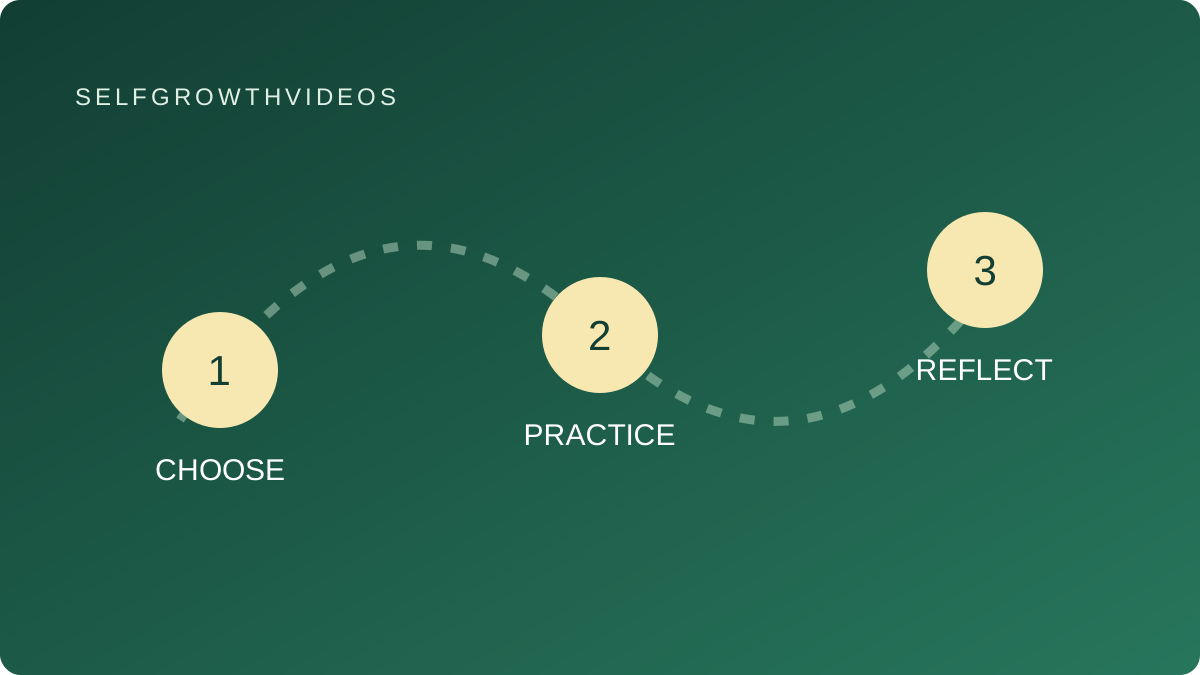 Choose, practice, reflect
A practical learning exercise
The Lesson
Your message asks whether a colleague can review a draft. The AI rewrite sounds polished, but now it thanks them for agreeing to review it. A question has become an arrangement. Before choosing the version with the nicest wording, check whether it still expresses the decision you need.
In the publicly visible email-rewriting card in his official prompt library, Tristen O’Brien asks for recipient context, the desired response and any deadline. The prompt calls for different tones while preserving meaning and facts, and asks for missing details rather than inventing them. His official speaking page identifies him and links his AI teaching channel.
The useful distinction is between changing how a request sounds and changing what it requests. We can practice that distinction with a fictional message. The comparison exercise below is SelfGrowthVideos work, not O’Brien’s prompt or a promise that a recipient will reply.
First, state the ask outside the message. For example: “Find out whether Sam is willing to review a two-page outline.” That sentence gives you something to compare with every rewrite. “Make this professional” does not tell you whether the assistant should ask permission, confirm an agreement or request a decision.
Next, separate supplied facts from open questions. An outline’s length may be known; Sam’s availability may not be. A possible date is different from a deadline already agreed. Keep those distinctions in a short note beside the draft. When reviewing a rewrite, look for new claims about what someone has promised, what you can deliver and what happens next.
Then compare tone without treating it as evidence. A friendly version can still preserve a direct question. A shorter version can still mention that the recipient has not yet agreed. If a draft makes your request sound settled, restore the question even if the sentence becomes less smooth. Clarity includes the current state of the conversation.
Current Anthropic guidance on explicit instructions recommends describing the output and its constraints. For this trial, the important constraint is preserving the ask and supplied facts. You can work with paper drafts or an assistant you already use; no email account connection is needed.
Reflection
- What exactly do you want the recipient to decide or do?
- Have they agreed, or are you still asking?
- Which dates are proposals and which are commitments?
- What relationship context helps you choose a tone?
- Which fact would need clarification before you could write a faithful message?
Practice
Original SelfGrowthVideos exercise: compare two rewrites against one ask. These fictional details and review steps are ours, not O’Brien’s method or an endorsed template. Keep this as a writing trial; do not send a message.
- Write the reference note. You have a two-page outline for a volunteer workshop. You want Sam to consider reviewing it. Sam has not agreed. You can share the outline on Wednesday. There is no confirmed review deadline.
- Name the ask. Write: “Would Sam be willing to review the outline?” Keep that sentence visible while you draft.
- Make a short and a warm version. Write both yourself, or ask an assistant to produce them from the reference note. Specify that neither may invent an agreement or a deadline. Ask it to identify missing information instead of filling the gaps.
- Check each version. Underline the actual question. Circle every statement about the outline, availability or dates. Compare each circled statement with the reference note. Mark an unsupported claim for correction, even if it sounds reasonable.
- Try a deliberately flawed line. “Thanks for reviewing my workshop outline by Friday” fails this trial: Sam has not agreed, and Friday was never supplied as a deadline. Revise it so the decision remains open. For example: “Would you be willing to review my two-page workshop outline? I can share it on Wednesday.”
- Choose and explain. Pick the version that fits the relationship while preserving the ask. Write one sentence explaining why. If neither passes, repair one specific mismatch and compare again.
Review
At your next writing practice, use a different fictional request, such as asking someone whether they can help arrange a room. Can you identify the ask before reviewing the rewrite? Did your check catch a changed commitment or an invented date? Keep the correction beside the draft so you can see what your review contributed. A well-checked draft is a better basis for your own decision; it does not guarantee a response or replace your judgment about the relationship.