Tyler Perry: Plan a Deliberate Next Version
What will be different when I return to this creative project?
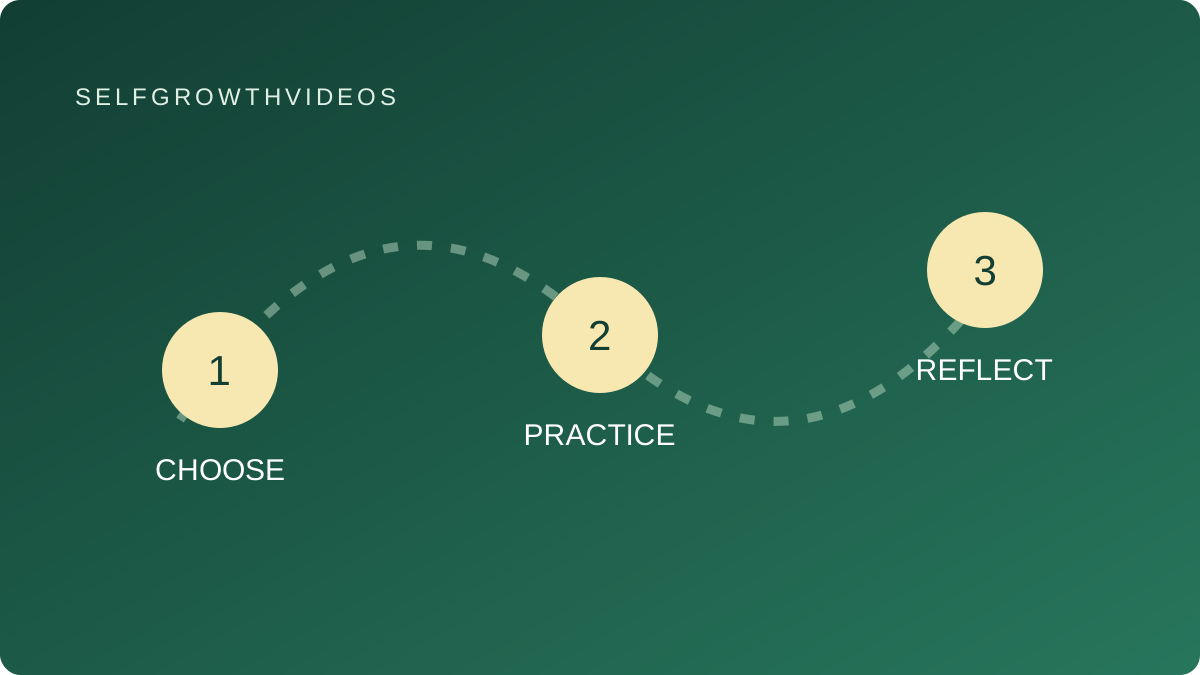 Choose, practice, reflect
A next-version exercise
The Lesson
You have a draft of a short film, a community guide, or a creative presentation. It has not connected as you hoped. Before starting again, ask what you intend to do differently. Returning to a project can include a deliberate revision rather than another round of the same work.
In CNN’s transcript of his 2009 conversation with Larry King, Tyler Perry describes returning to his first play over several years. His account also includes serious difficulties along the way. His official announcement of Higher Is Waiting describes a book of reflections on lessons from his life.
Perry’s history is a personal account of persistence, not a promise that repeating a project will make it succeed. The practical exercise here asks a separate question: how can you make your next version intentional and manageable?
Begin by naming something worth keeping. Perhaps the central question still matters to you, a scene communicates clearly, or a reader understood one part of the guide. A disappointing response does not tell you that every part needs to disappear.
Then identify one change and the reason for it. “Make it better” gives you no direction. “Move the explanation of who the guide is for into the opening paragraph” is a revision you can actually make. Its purpose might be to help a newcomer recognize whether the guide answers their question.
Keep the reason distinct from a prediction. You can intend to clarify the opening without declaring that the revision will attract an audience. If the change is based on a reader’s comment, record what they actually said. If it is your own judgment, identify it that way.
Choose a boundary for this version. You might revise one scene or prepare a rough sequence of slides using material you already have. A small revision can answer a question without committing you to a larger production. Some projects need new information, permission, or collaborators before work can continue; recognize that dependency rather than treating persistence as a substitute.
Reflection
- Which part of the project still serves its purpose?
- What specific difficulty does the next change address?
- Is my reason based on feedback, an observation, or a guess?
- What can this version leave for later?
You can decide that a project should pause or end. The question is what the available evidence and your current circumstances support.
Practice
This is an original SelfGrowthVideos exercise. It is not a planning method prescribed by Perry and does not imply his endorsement.
Save the current version before editing. Write a short revision note:
- Keep: One element that still belongs, with your reason.
- Change: One concrete revision and the difficulty it addresses.
- Boundary: What you will complete in this version and what will wait.
- Check: A question you can examine once the revision exists.
For example: “Keep the guide’s worked example. Move the explanation of the intended reader to the beginning. Revise the opening page only. Then ask whether a willing newcomer can tell who the guide is for.”
Make the revision within the chosen boundary. Put unrelated improvements in a separate note so they do not silently expand the task. If you discover that your proposed change needs information you do not have, record that need before proceeding.
When another person’s response would help, ask whether they are willing to look at the relevant part. Explain the question you are checking. Their reaction is one response to one version, not a verdict on your whole creative future.
Review
Compare the saved version with the revision. What changed? Does the new opening, scene, or sequence address the difficulty you named? What did the check reveal, and what remains uncertain?
Decide whether to keep the revision, change it again, seek information, or pause. Record the reason so the next session begins with a decision you can understand, rather than only the feeling that you should try harder.
Go Deeper
Explore Tyler Perry’s teacher profile. If you have not yet completed a first version, try Seth Godin: Finish a Small Creative Contribution. For a focused response to work already made, use Ask for Useful Feedback on a Project You Care About.