Viola Davis: Prepare a Small Scene Before Judging Your Talent
How do I prepare a small piece of work when I feel inexperienced?
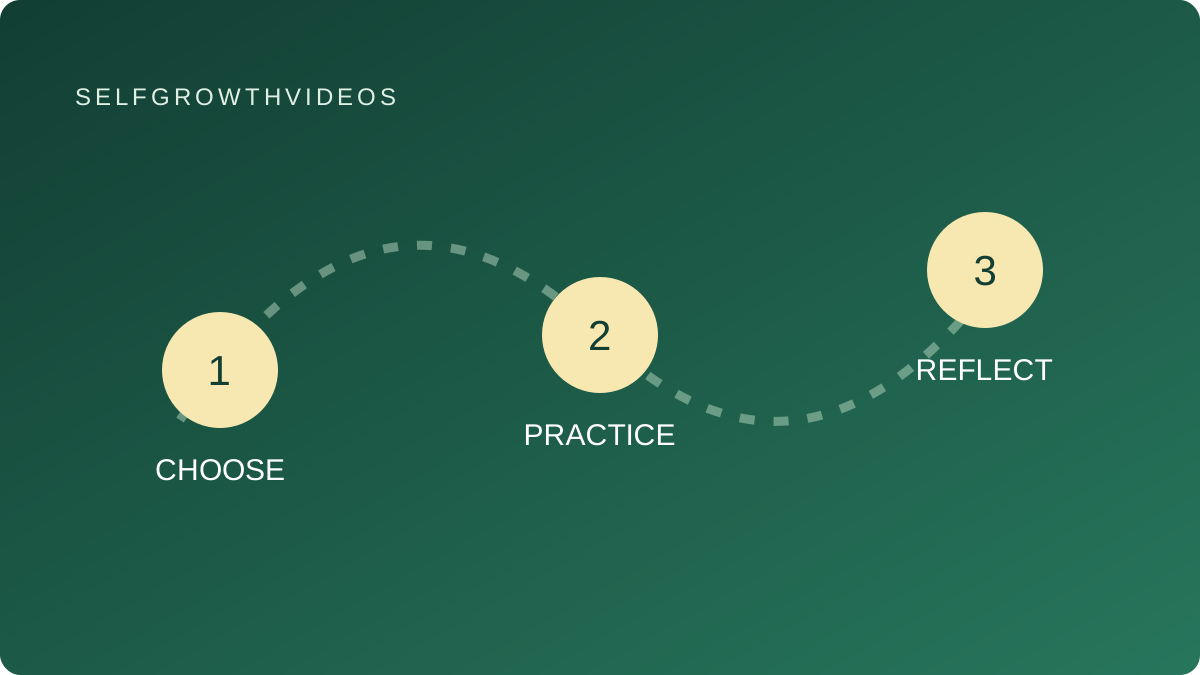 Choose, practice, reflect
A practical creative lesson
The Lesson
You want to try a short performance or write a scene, but your first attempt sounds stiff. It is easy to turn that moment into a verdict: perhaps you are not creative enough. Before making that judgment, ask whether you have given yourself something specific to work with.
A small scene still needs a person, a situation and a reason for speaking. Preparing those elements gives you choices to rehearse and revise. You can begin privately, without an audience or a plan to become a professional actor.
What Viola Davis’s account of preparation offers
In BAFTA’s official A Life in Pictures interview transcript, Viola Davis describes preparing for her brief role in Doubt by developing the character’s background and discussing it with others. She also challenges writing that reduces a person to a thin label. Her account gives a concrete example of substantial preparation behind a short performance.
For this practice, take the importance of understanding a character’s situation as a starting point. You do not need to reproduce the extent of Davis’s preparation or use the film’s difficult subject matter. The exercise below is original SelfGrowthVideos material, not Viola Davis’s worksheet or a method she prescribes. Her inclusion here does not imply endorsement of this site.
Replace a label with a situation
“An angry neighbor” does not tell you much about what a person is trying to do. “A neighbor needs to retrieve a borrowed ladder before a delivery arrives” gives the person a reason to speak, a practical limit and something another person can respond to.
Now the scene can contain more than an attempt to sound angry. The neighbor might begin politely, hesitate to mention the delivery, then make a direct request. You can try different choices and ask whether the situation remains understandable.
This is fictional work: inventing a character’s background is part of the task. If you write about a real person instead, keep verified details separate from your imagination. An observed gesture does not tell you someone’s private motives, and a recognizable person need not become the subject of your practice.
Give preparation a stopping point
Preparation can also become a place to hide from making an attempt. For a first scene, choose only the details you need to understand this exchange: where the person is, what they want and what gets in the way. Save unrelated backstory for later.
Set a modest boundary, such as six lines of dialogue. Your first task is to make the exchange clear. You can make another attempt after you hear how the words sound. Neither the length of the scene nor the time you spend on it measures your worth.
Reflection
- What does my fictional character want from this particular exchange?
- What practical detail makes the request matter now?
- Have I substituted a general label for a situation I can describe?
- What one choice could I actually change in the next attempt?
Practice
This is an original SelfGrowthVideos exercise. Use paper or an ordinary notes app; keep the result private if you prefer.
- Choose an ordinary fictional exchange. Someone asks for a borrowed item, tries to rearrange a shared task or needs help finding an unfamiliar room. Pick a situation you can explore comfortably.
- Write three preparation notes. Describe the setting, what the person wants and one obstacle. Make the details concrete without building an entire life history.
- Draft six lines. Let the person try to get what they want through words or a simple action. Give the other person a response that affects what happens next.
- Read the exchange aloud. Try it at a comfortable pace. Notice where a request is unclear or a sentence does not sound like something this person would say.
- Change one choice. Revise the opening request, the timing of a disclosure or one response. Read the scene again and compare that specific change.
In the ladder example, the first version might begin with an accusation. A second version could begin by naming the delivery and asking when the ladder can be returned. Neither version is automatically better; decide which fits the character and makes the exchange intelligible.
Review
After the second attempt, write what the preparation helped you understand and what remains unclear. Could a reader identify the request and the obstacle? Did the revision change the exchange in the way you intended?
Choose a next craft task: clarify the setting, make a response more specific or try another short scene. “The request arrives too late” gives you something to work on. “I am bad at this” gives you very little guidance. You are reviewing a piece of work, not deciding whether you deserve to make another one.
Go Deeper
Browse the existing Viola Davis teacher profile and Storytelling learning hub. Her book Finding Me is listed on its official publisher page.
For writing from remembered experience, try Maya Angelou: Begin Your Writing With One Ordinary Scene. When you are ready to finish a useful piece for someone else, explore Seth Godin: Finish a Small Creative Contribution.
Books on this topic
Books from this library that go deeper on the ideas in this page.

Some links on this page are affiliate links. As an Amazon Associate I earn from qualifying purchases. How affiliate links work here