Wes Roth: Write an AI Agent Handoff You Can Review
What must an agent return so I can check its work and decide the next action?
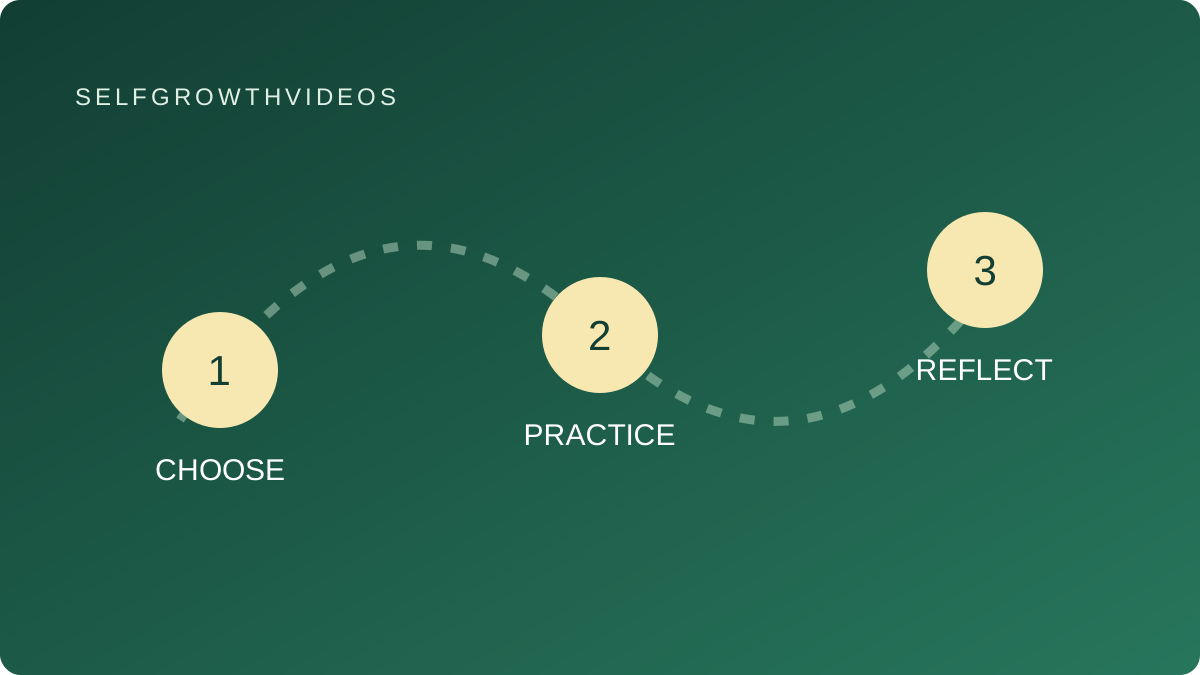 Choose, practice, reflect
A practical learning exercise
The Lesson
You ask an assistant to research three options for a small event. It returns a confident recommendation. You still need to know where the information came from, which details are uncertain, and whether it contacted anyone. The missing piece is the handoff.
In his September 2026 Natural 20 report on dots and other agent products, Wes Roth describes the shift toward agents with continuing context, connected tools, and work that can progress beyond a single answer. His author archive identifies that report as part of his AI coverage.
The shift creates a practical planning question. When work continues between conversations, what information should return to the person responsible for it? A final answer without a record of its basis may be difficult to review.
OpenAI’s dots introduction describes inspecting work and managing access and action approvals. The official Grok Bot introduction describes multi-step work across apps and messaging an agent about its tasks. Those provider descriptions help orient you to the products. They do not replace a clear brief for your own project.
Separate three things in the handoff: the proposed result, the evidence used, and the actions taken. A venue comparison is a proposed result. The public pages supporting availability or facilities are evidence. Contacting a venue would be an action. You should be able to distinguish them without guessing.
Describe what remains unresolved. A missing accessibility detail is not the same as a confirmed absence of access. An old price is not a current quote. Ask for uncertainty to be visible so you can decide what needs another source or a direct conversation.
Define the point where the work returns to you. For a first research task, that can be a comparison draft with no outreach, booking, payment, or record changes. Check the tool’s actual access controls before relying on this boundary. Instructions and settings should agree.
A handoff also needs a next question. Instead of asking the assistant to keep advancing indefinitely, specify what decision you want to make after reviewing its draft. You may need to clarify the event requirements before researching anything further.
This is a way to structure your work, not evidence that a particular agent will obey every instruction. Inspect a small trial and keep the scope limited until you understand the results and controls.
Reflection
- Can I tell a recommendation apart from its supporting evidence?
- Which actions am I authorizing, and which require a new decision?
- What uncertainty must remain visible in the result?
- What will I decide when this task comes back to me?
Practice
This is an original SelfGrowthVideos exercise. It is not a handoff protocol prescribed by Wes Roth, OpenAI, or Grok.
Use three invented venue descriptions for a fictional community workshop. Give one a clear capacity, one an unclear accessibility detail, and one a price without a current date.
Write an agent task brief with these fields:
- Deliverable: a comparison draft, not a booking.
- Inputs: only the three supplied fictional descriptions.
- Evidence: label each detail with its source description.
- Uncertainty: flag absent or undated information.
- Actions: do not contact anyone or change an external account.
- Return point: stop after the draft and ask which missing detail to investigate next.
Try the brief on paper with a willing person or with an assistant you can access. Check whether the draft separates findings, uncertainties, and actions. Compare it with the original descriptions before approving another step.
Add a short task record: what was requested, what was returned, what you corrected, and the decision still needed. You can practice this without connecting any accounts.
Review
Before repeating the task, read your task record. Could you trace the recommendation to the supplied evidence? Were missing details preserved? Was the next decision clear?
Revise one field in the handoff and try another invented example. Keep any unresolved permissions or reliability questions visible. A clear handoff helps you decide what to check; it does not guarantee a tool’s result.
Go Deeper
Explore Wes Roth’s creator profile, the AI study area, and AI tools. For documenting a repeated task before handing it away, read Dan Martell: Document One Recurring Task.