Chase Hughes on DMT: What a Navy Behavior Expert Learned About Consciousness | Self Growth Videos
Resources To Pair With This Clip
- Chase Hughes official site for his behavior, training, speaking, and book work.
- The Diary of a CEO for more long-form interviews around performance, psychology, health, and belief.
- Rick Strassman DMT research for the clinical research context behind many modern DMT conversations.
- DMT and consciousness books for a deeper reading path.
- Chase Hughes DMT email path for future consciousness and behavior-analysis lessons.
Study note: DMT content should be approached as consciousness research and personal-report material, not as medical advice. If you are studying the subject seriously, pair interview clips with research-oriented books, safety context, and integration resources.
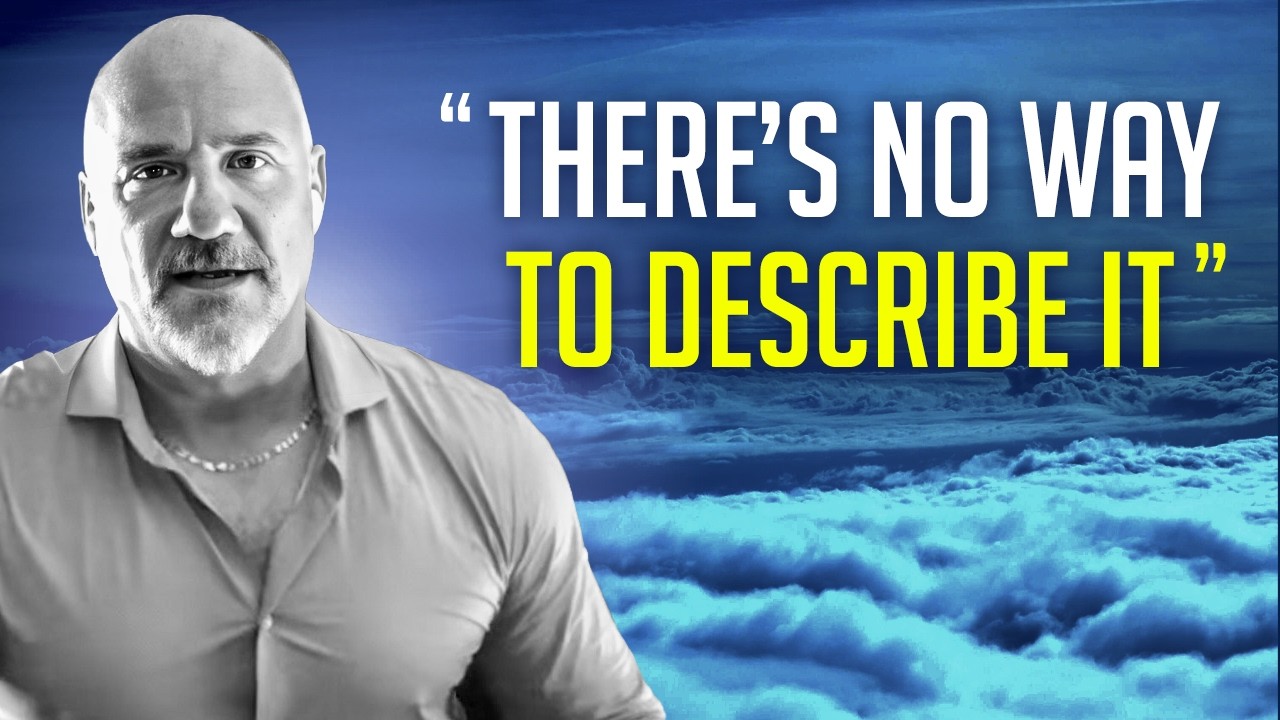
Chase Hughes spent years as a behavior expert for the US Navy — reading people, studying deception, understanding how the mind constructs reality. He’s not a typical psychedelics advocate. Which is exactly what makes his account of DMT worth listening to.
In this clip from The Diary of a CEO (April 2026), Hughes breaks down what actually happens when someone takes DMT — and why the scientists closest to this research have stopped calling it a hallucination.
What Hughes Actually Says
A few things stand out in Hughes’ account that go beyond the typical “mind-blowing experience” narrative:
The entities are consistent. Hughes points out that across 4,500 years of recorded history with DMT-containing substances, users encounter the same 7-8 types of entities. Every time. Cross-culturally. Without prior knowledge. Hallucinations don’t do that. Hallucinations are individual. This is shared — and that distinction matters enormously to researchers trying to explain the data.
Scientists believe it’s real. Hughes says every scientist he knows who is actively studying DMT has concluded that what users are experiencing isn’t hallucinatory in the conventional sense. The working hypothesis among neuroscientists is that the brain acts as a filter for consciousness — and DMT temporarily removes that filter, revealing a layer of reality that’s normally screened out.
It permanently changes your relationship with this reality. Hughes describes the re-entry experience — coming back to ordinary life after DMT — as returning to something that looks flat, artificial, like claymation. Not broken, but clearly constructed. For many people, that perceptual shift never fully reverses.
You can be banned. One of the stranger consistent reports across DMT accounts: some users are explicitly told by the entities not to return. Hughes mentions this not as metaphor but as a recurring phenomenon documented across independent accounts.
Why a Behavior Expert’s Perspective Matters Here
Hughes’ background in behavioral analysis gives him a particular lens on the entity question. He’s spent his career studying how minds construct narratives, how people confabulate, and how the brain generates explanations for things it doesn’t understand. His conclusion — that DMT experiences don’t fit the profile of normal confabulation or hallucination — carries more weight coming from someone trained to identify exactly that.
Where to Go Next
If this video sparked your interest, the complete DMT guide covers the science, the endogenous production theory, and the consciousness implications in full. For the original research that started it all, read about Rick Strassman’s DMT studies at the University of New Mexico.
If you’re studying plant medicine seriously, start with set and setting and the ayahuasca guide before you make any real-world decision.
Chase Hughes is a former US Navy behavior expert, author, and speaker. This clip is from The Diary of a CEO with Steven Bartlett. The full episode is linked in the video description.
You Might Also Enjoy
Rick Strassman and the Spirit Molecule: DMT Research That Changed Everything | Self Growth Videos
Explore →Terence McKenna: The Philosopher of Plant Consciousness | Self Growth Videos
Explore →