Creator Profile
Bob Proctor
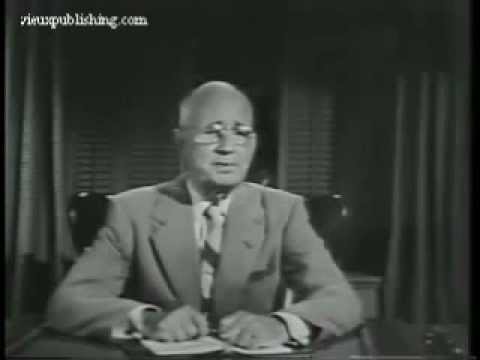
Bob Proctor (1934–2022) was one of the longest-serving and most influential prosperity teachers of the 20th century. A Toronto-born high-school dropout who was $6,000 in debt and working as a janitor at 26, Proctor read Napoleon Hill's Think and Grow Rich in 1961 and — applying the principles literally — 10x'd his income within a year. He spent the next six decades teaching the same material. He was featured in the 2006 film The Secret and later co-founded the Proctor Gallagher Institute. His book You Were Born Rich has sold millions of copies in dozens of languages.
proctorgallagherinstitute.com60+
Years of Continuous Teaching
2006
Featured in The Secret
$4K → $175K
Income Jump in 2 Years
1984
You Were Born Rich Published
Video library
Bob Proctor videos on paradigms, prosperity, and identity
Bob Proctor is best watched as a study path: understand the paradigm, see how identity creates results, then move into You Were Born Rich and the prosperity lineage behind it.
Section 01
Paradigms and identity
Start here for Proctor's central claim: your visible results are downstream of an invisible paradigm.
Section 02
You Were Born Rich and prosperity
This path connects Proctor's teaching to money, prosperity, goal-setting, and Napoleon Hill's influence.
Browse all 4 videos
Find a title, choose a topic, or explore the full collection. Videos may be hosted by the author or by interview and event channels.
4 videos in this collection
No videos match this search. Try a different title or choose all videos.
About Bob Proctor
Robert Corry Proctor was born July 5, 1934 in Toronto, Canada. He dropped out of high school, bounced through a series of dead-end jobs, and by age 26 was working as a Toronto fire department janitor, earning $4,000 a year, carrying $6,000 in debt, and — as he told the story in hundreds of lectures afterward — looking at his life with the strong feeling that nothing in it was going to change on its own.
A friend handed him a copy of Napoleon Hill’s Think and Grow Rich in 1961. Proctor read it cover to cover. Then read it again. Then began reading it every single day. He did not just agree with the ideas — he treated the book as a literal operating manual. He wrote down a specific income goal, he spent time every day holding the goal in vivid mental imagery, and he took every small action he could identify toward the goal regardless of whether it made immediate sense.
Within one year his income had moved from $4,000 to roughly $40,000. Within two years, $175,000. He bought a cleaning business, then another, then scaled the operation into multiple cities. By his early thirties he had built a fortune by the standards of 1960s Toronto — without a high-school diploma, without capital, and without any prior business experience.
In the late 1960s Proctor joined the Nightingale-Conant organization under Earl Nightingale himself — the legendary radio broadcaster and founder of the modern personal-development audio industry. Nightingale was the first person to put Proctor on a stage. Proctor spent nearly a decade working alongside Nightingale, refining his ability to articulate what Hill had articulated before him, and building the signature lecture style — slow, deliberate, grandfatherly, every word weighted — that would define him for the next five decades.
He went independent in the 1980s and began teaching his own seminars, workshops, and multi-day Paradigm Shift events. He wrote You Were Born Rich in 1984 — his book-length distillation of what he had pulled out of Think and Grow Rich plus three decades of teaching experience. It has since sold millions of copies across dozens of languages. In 2006 he appeared as one of the featured teachers in The Secret — the Rhonda Byrne film and book that introduced law-of-attraction thinking to a mainstream global audience and did more to popularize the underlying material than anything else in the prior half-century.
In 2013 Proctor co-founded the Proctor Gallagher Institute with longtime business partner Sandy Gallagher. The Institute systematized his teaching into a formal consultancy and coaching practice, developed the Thinking Into Results program (now used inside Fortune 500 companies for leadership development), and trained a generation of certified consultants to carry the methodology forward. He continued lecturing, writing, and recording well into his eighties.
Bob Proctor died on February 3, 2022 at age 87, in his home in Toronto. He had been teaching continuously for more than 60 years, had personally coached tens of thousands of students, had mentored a generation of prosperity teachers, and had — by his own unvarying account — been working the same principles every day since he first read Hill’s book in 1961.
His central teaching, compressed: you are running a paradigm. The paradigm is the sum of all the beliefs your environment has installed in you about what is possible, what is dangerous, what is “realistic,” what is “enough.” Your results are the output of your paradigm. If you want different results, you don’t work on the results — you work on the paradigm. The work is slow, it is mostly invisible to other people, and it is the only thing that has ever produced lasting change in anyone’s life.
Signature Teachings
Key Ideas from Bob Proctor
01
The paradigm runs the result
Proctor's core idea is that outer results come from inner programming. Change the paradigm and the result can change.
02
Repetition is reprogramming
He taught study, visualization, written goals, and daily repetition as practical ways to change subconscious patterns.
03
Prosperity begins with identity
For Proctor, wealth is not only tactics. It is a person's self-image, expectations, and willingness to act from a larger identity.
Books by Bob Proctor
3 titles
Some links on this page are affiliate links. As an Amazon Associate I earn from qualifying purchases. How affiliate links work here
Resources
Bob Proctor resources
Use these as the practical starting points for Proctor's paradigm, prosperity, and Think and Grow Rich lineage.
Official
Proctor Gallagher Institute
Official hub for Bob Proctor programs, videos, and legacy material.
Official
Explore resource →
Book
You Were Born Rich
Proctor's signature book on prosperity, self-image, and paradigms.
Amazon affiliate
Explore resource →
Book
Think and Grow Rich
The Napoleon Hill book that started Proctor's lifelong study path.
Amazon affiliate
Explore resource →
Some links on this page are affiliate links. As an Amazon Associate I earn from qualifying purchases. How affiliate links work here
FAQ
Bob Proctor FAQ
Quick context for readers using Bob Proctor as a doorway into prosperity and mindset study.
What is Bob Proctor best known for?
Bob Proctor is best known for teaching paradigms, prosperity, self-image, and You Were Born Rich. He was also a featured teacher in The Secret.
What Bob Proctor book should I start with?
Start with You Were Born Rich. Then read Napoleon Hill's Think and Grow Rich to understand the source material Proctor studied for decades.
What does Bob Proctor mean by paradigm?
A paradigm is the mental and emotional programming that shapes what feels possible, normal, risky, or realistic. Proctor taught that changing the paradigm changes the results a person repeatedly produces.